Sustainable Hardware
NOCO2
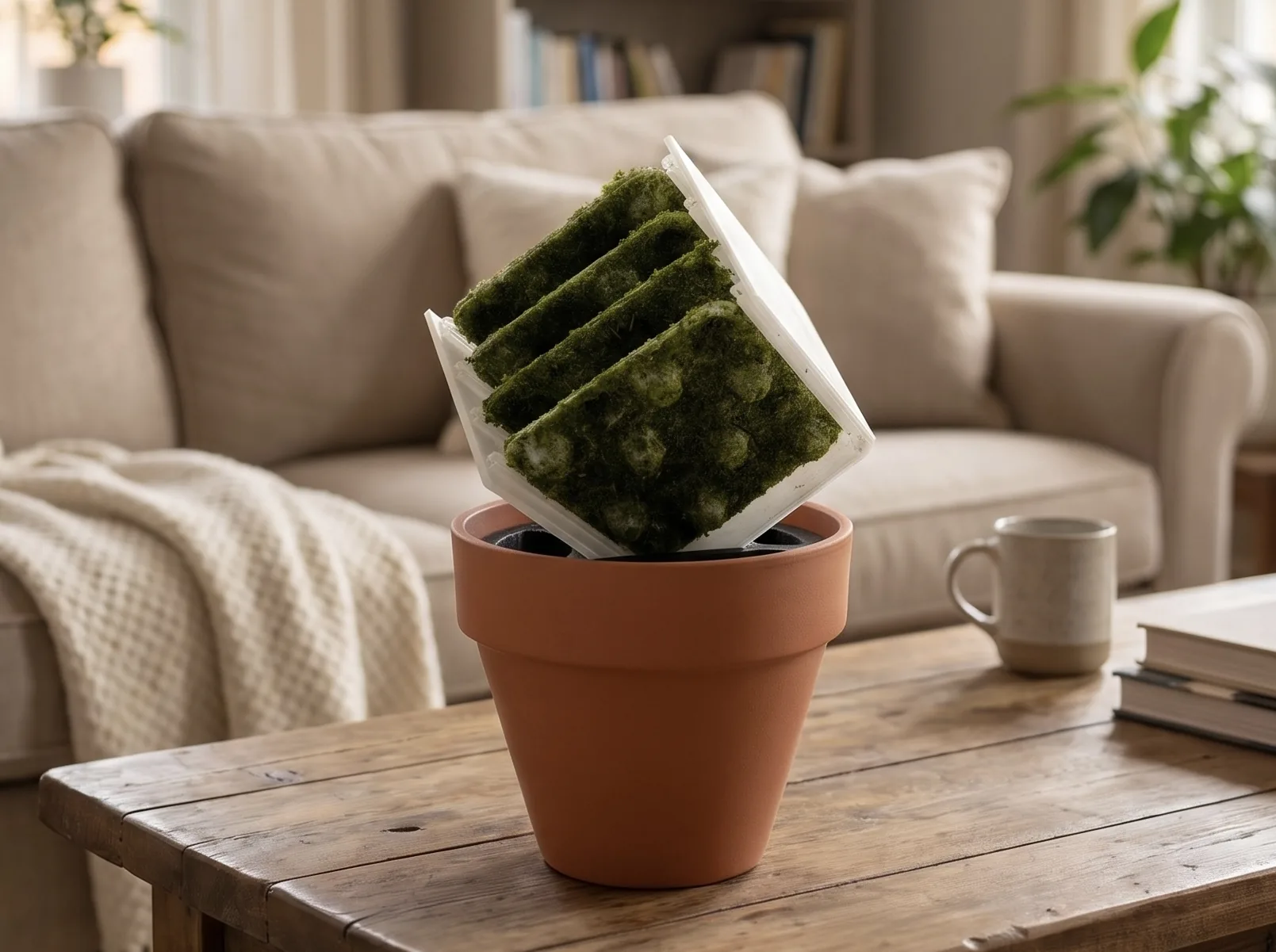
NOCO2 transforms non-recycled thermoplastics into modular wall panels and desk planters coated in live sheet moss. It is decor that reuses plastic waste, absorbs CO₂, and brings greenery indoors without care or sunlight.
Problem
Home decoration is outdated and unsustainable.
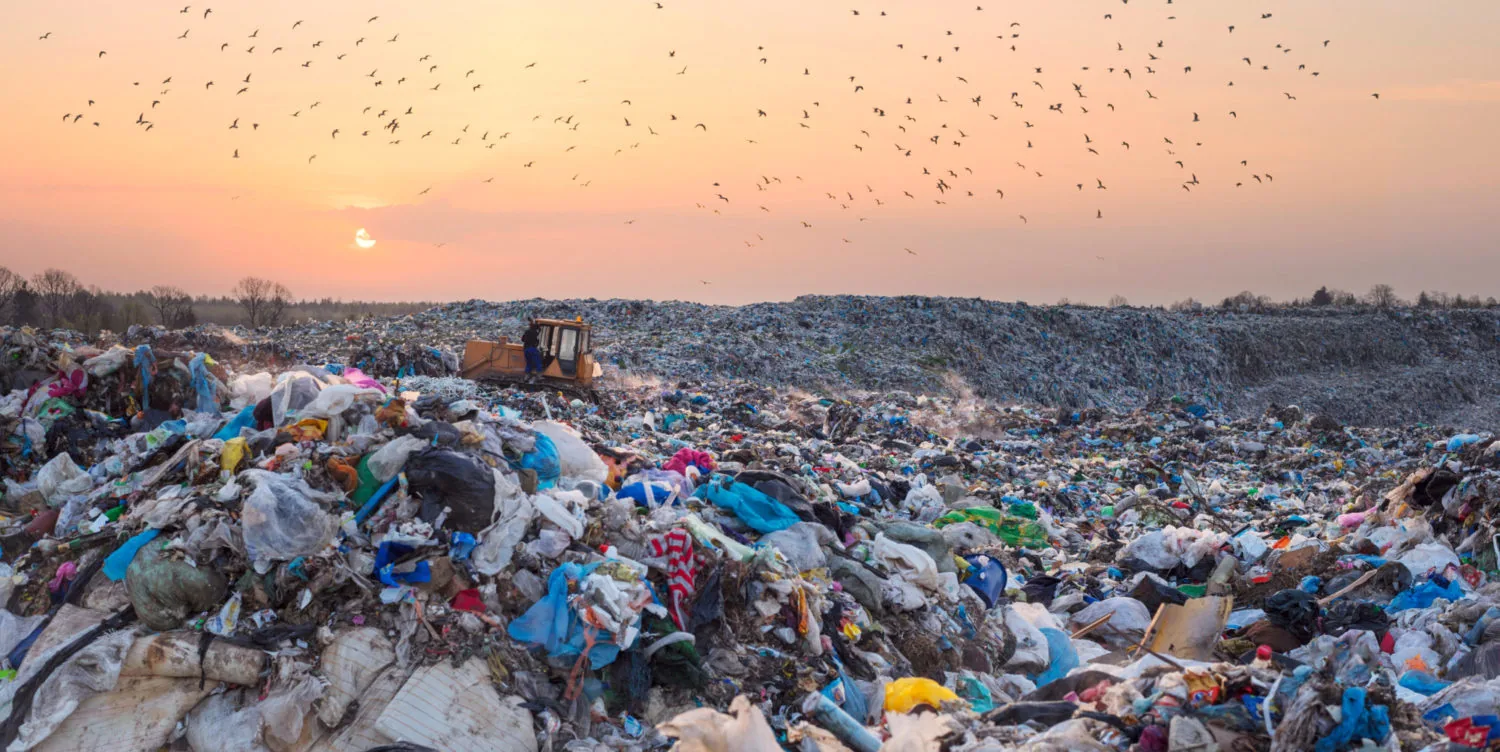
The US wastes 40 million tonnes of plastic every year, and 80% of it goes straight to landfill. Meanwhile, 77% of the wall decor market consists of mass-produced items built from PVC and other non-recyclable plastics. The industry that decorates our homes is quietly feeding the waste stream it sits on.
The obvious alternative, live plants, fails most people. 67% of plant owners find care more challenging than anticipated and 48% doubt their ability to keep plants alive at all. Waste plastic needed somewhere to go; homes needed greenery that doesn't die.
of plastic wasted every year in the US; 80% sent to landfill
Eco-conscious homeowners
Urban dwellers aged 25-45 who value sustainability and aesthetics.
Remote workers & creatives
Work-from-home professionals seeking calm, inspiring environments.
Boutique hotels & wellness spaces (B2B)
Brands that prioritize tranquility, wellness, and sustainability.
Ideation
Finding the process window where four plastics fuse.
We started from the material, not the product. Could PLA from failed 3D prints, TPU, HDPE from bottles and caps, LDPE from wrap be fused into a single usable substrate without industrial recycling infrastructure.
Early experiments mapped each polymer's behavior: PLA is rigid but brittle and dies at ~60°C; TPU bonds well with PLA and adds elastic recovery; HDPE brings strength-to-weight and chemical inertness but melts around 130°C; LDPE is soft, waterproof, and melts lowest at 110-115°C. The breakthrough was finding the 130-150°C thermal window where HDPE and LDPE fuse while TPU bonds the matrix: without degrading the PLA.
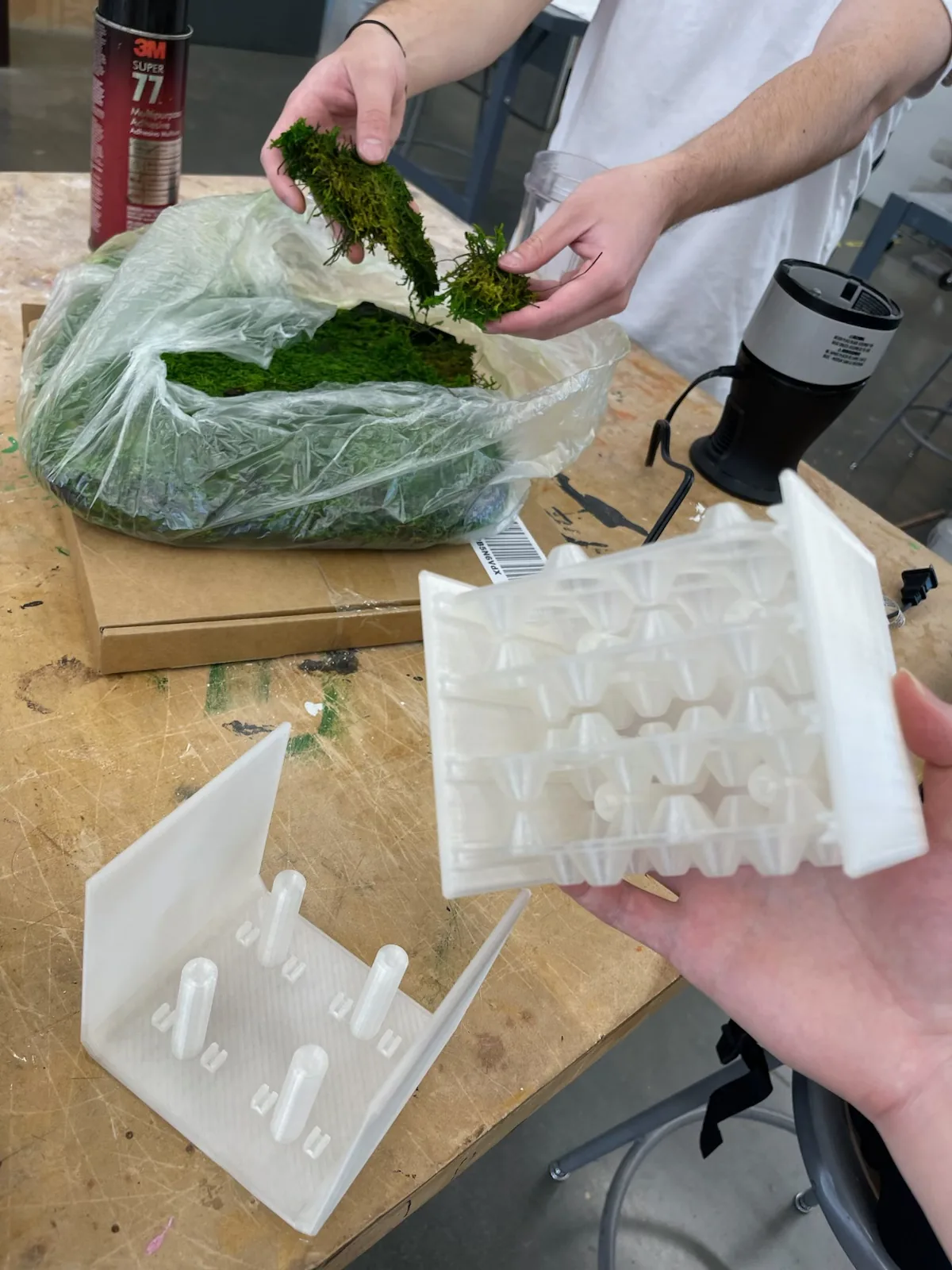
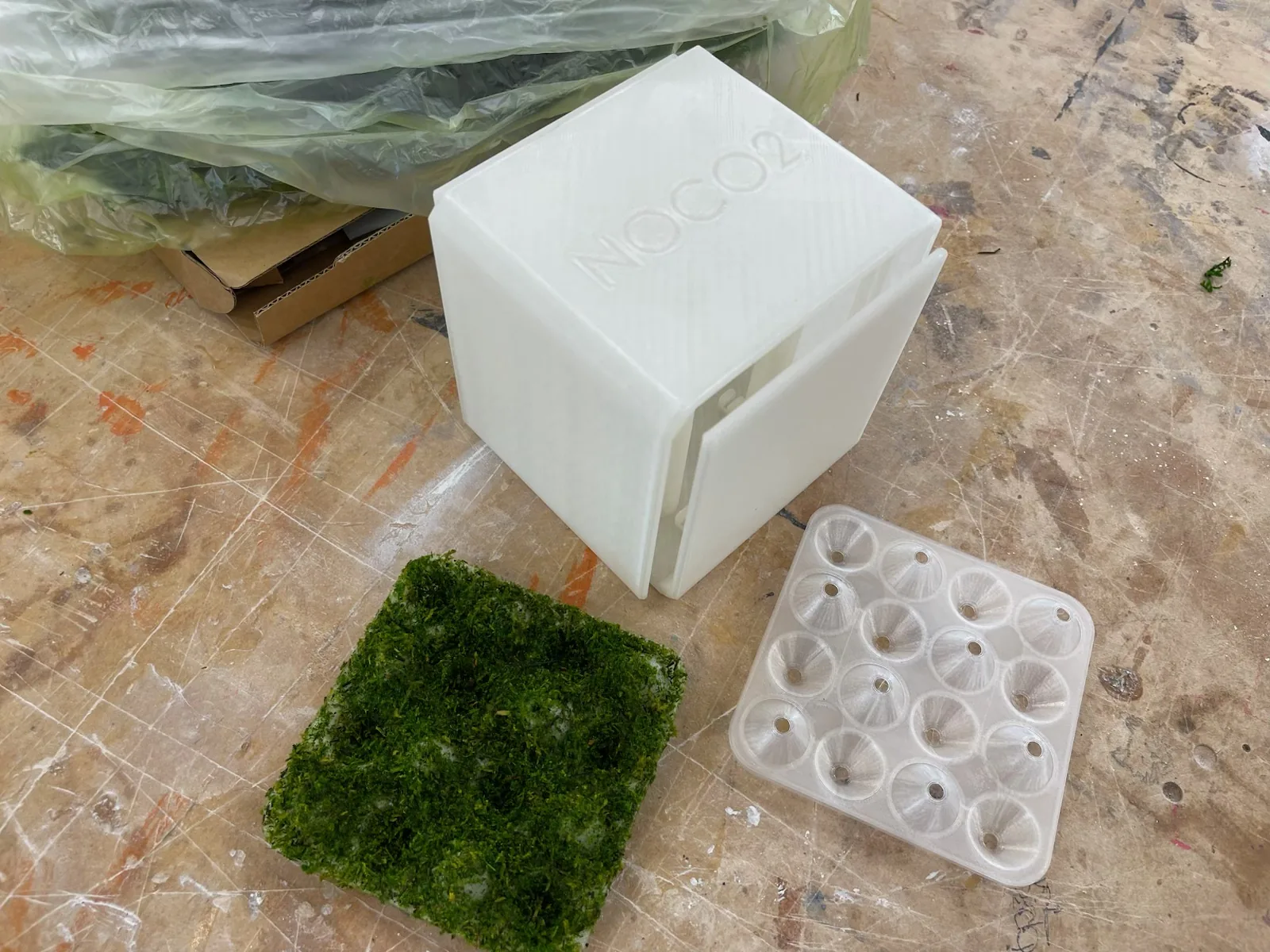
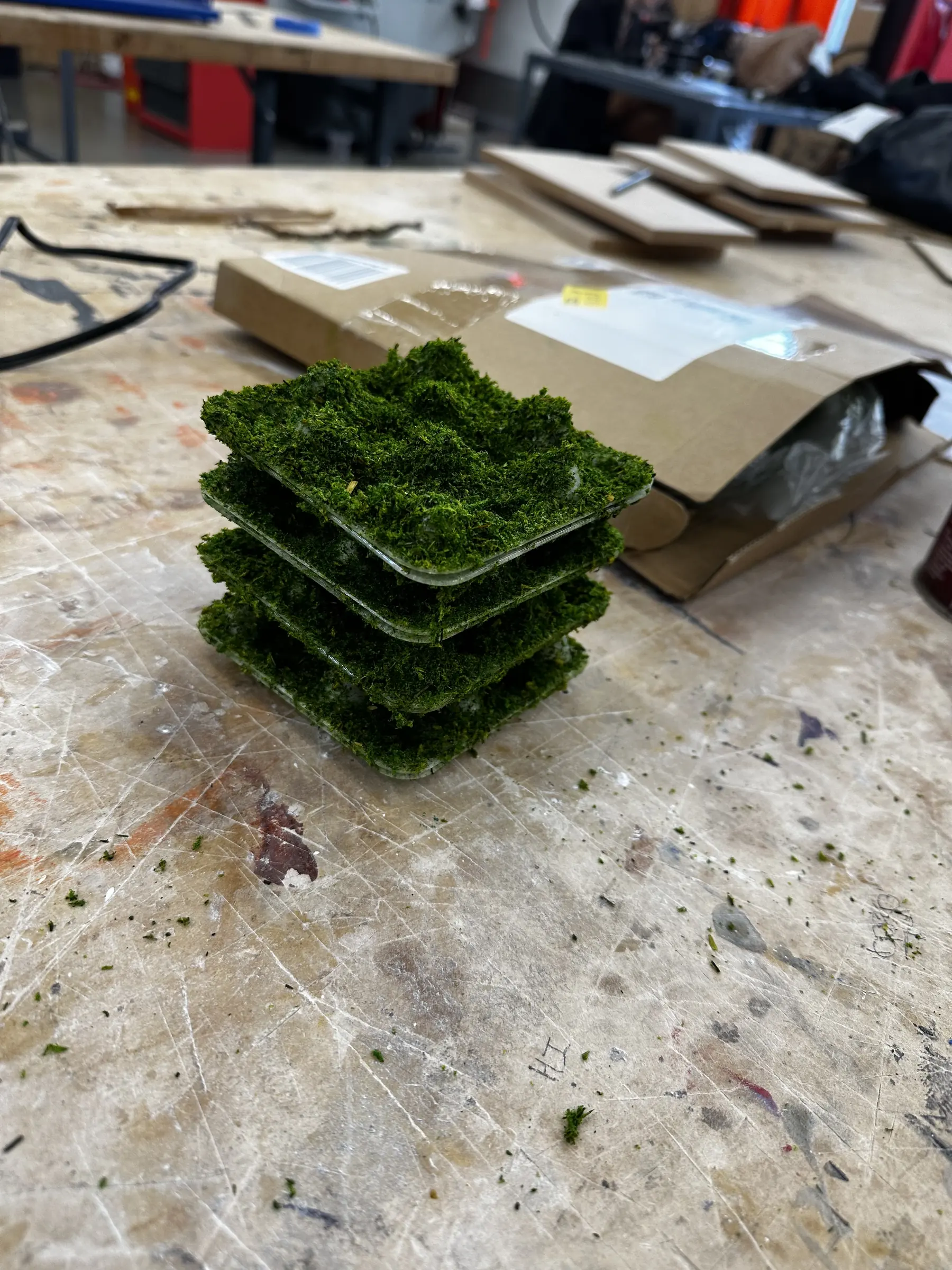
The wafer form followed from a constraint: moss needs a rough, high-surface-area substrate to grip. Incomplete fusion between polymers became the feature. We stopped fighting the messy surface and designed for it.
Solution
A recycled plastic wafer that grows live moss.
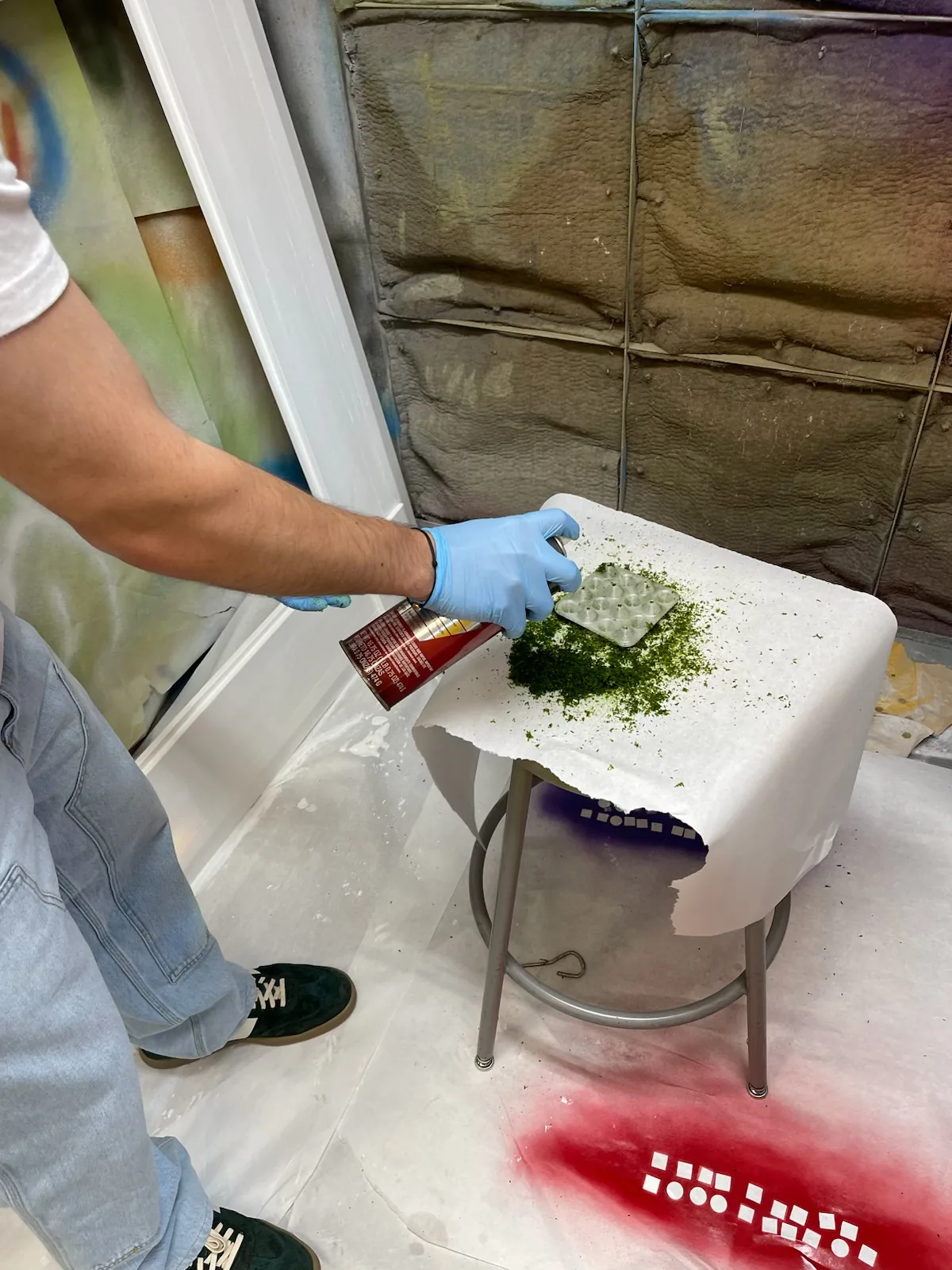
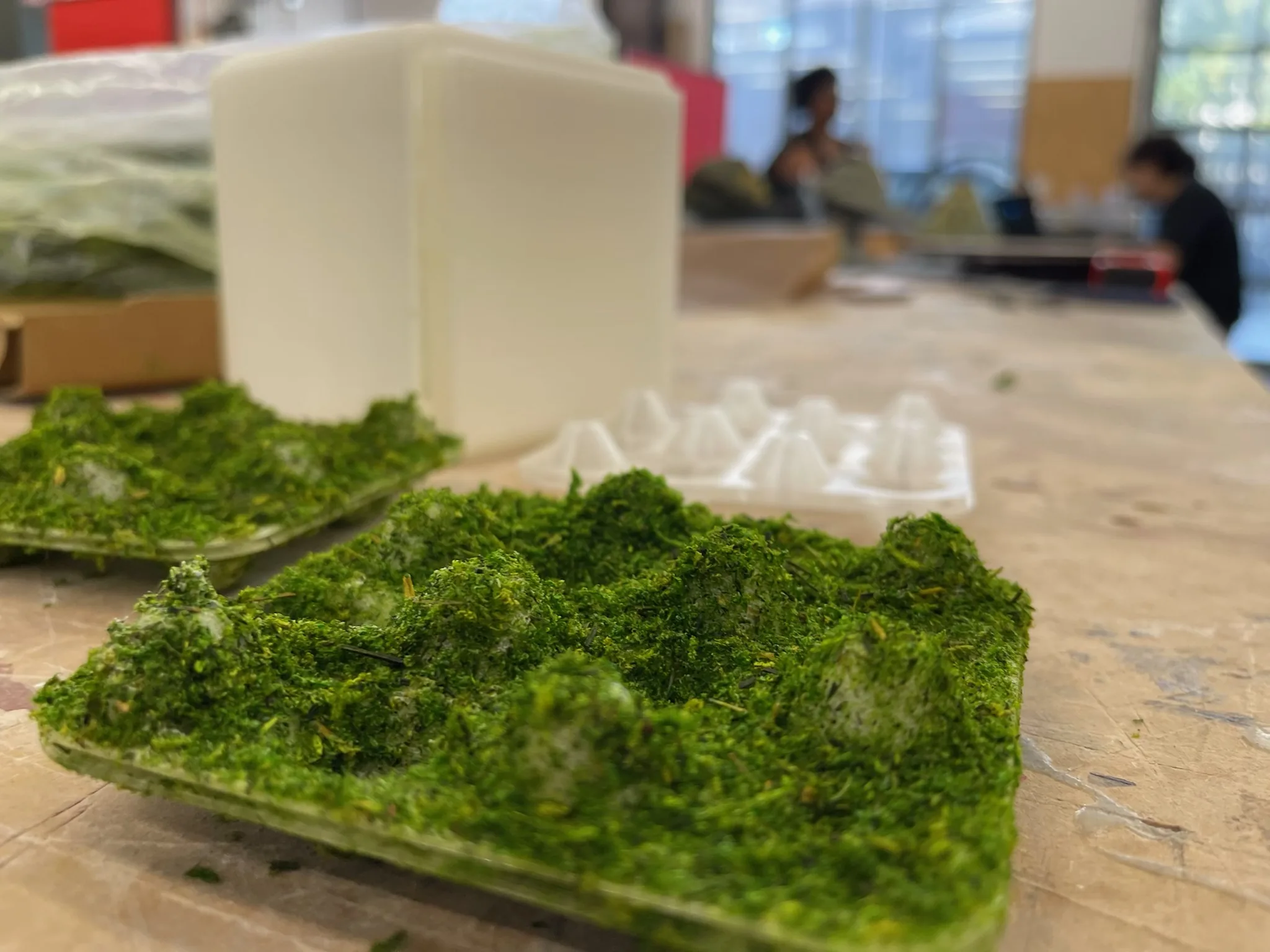
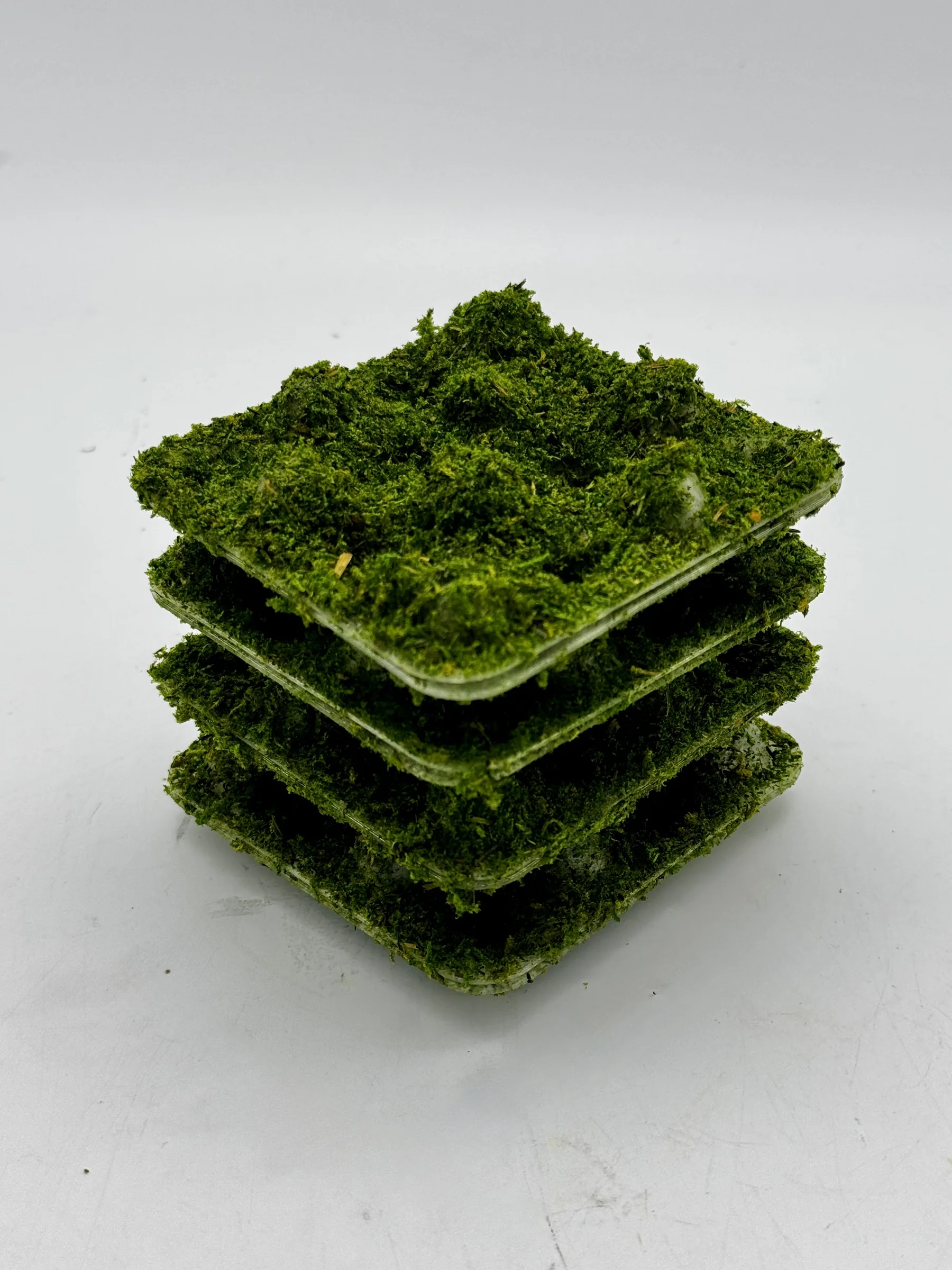
NOCO2 is a recycled-plastic wafer engineered as a growing surface for live sheet moss. A blend of four waste thermoplastics is melted and pressed into a thin, strong, malleable structure whose rough surface boosts moss adhesion; a water-based natural adhesive fixes the moss, and a water spray initiates growth. The moss self-sustains with minimal care.
Melt
Waste PLA, TPU, HDPE and LDPE are heated to 130°C with a heat gun or industrial oven until the plastics become pliable and begin to combine.
Press
A mould presses the molten composite into the wafer shape, then peels away.
Grow
A natural water-based adhesive adheres sheet moss to the textured surface; a water spray initiates self-sustaining growth.
Spec sheet
Features
Purifies the air
The live moss layer absorbs carbon dioxide and naturally purifies interior air; each 1-sqft panel sequesters 0.193 kg of CO₂ per year.
- 2.08 kg CO₂/m²/yr sphagnum absorption rate
- Offsets its own production footprint in 3 years 9 days, then runs carbon-negative
Greenery with zero care
No sunlight, no soil, no watering schedule. The moss self-sustains on the wafer, solving the failure mode that kills most houseplants.
- Water-based natural adhesive, no chemicals
- Stable under normal indoor humidity and temperature
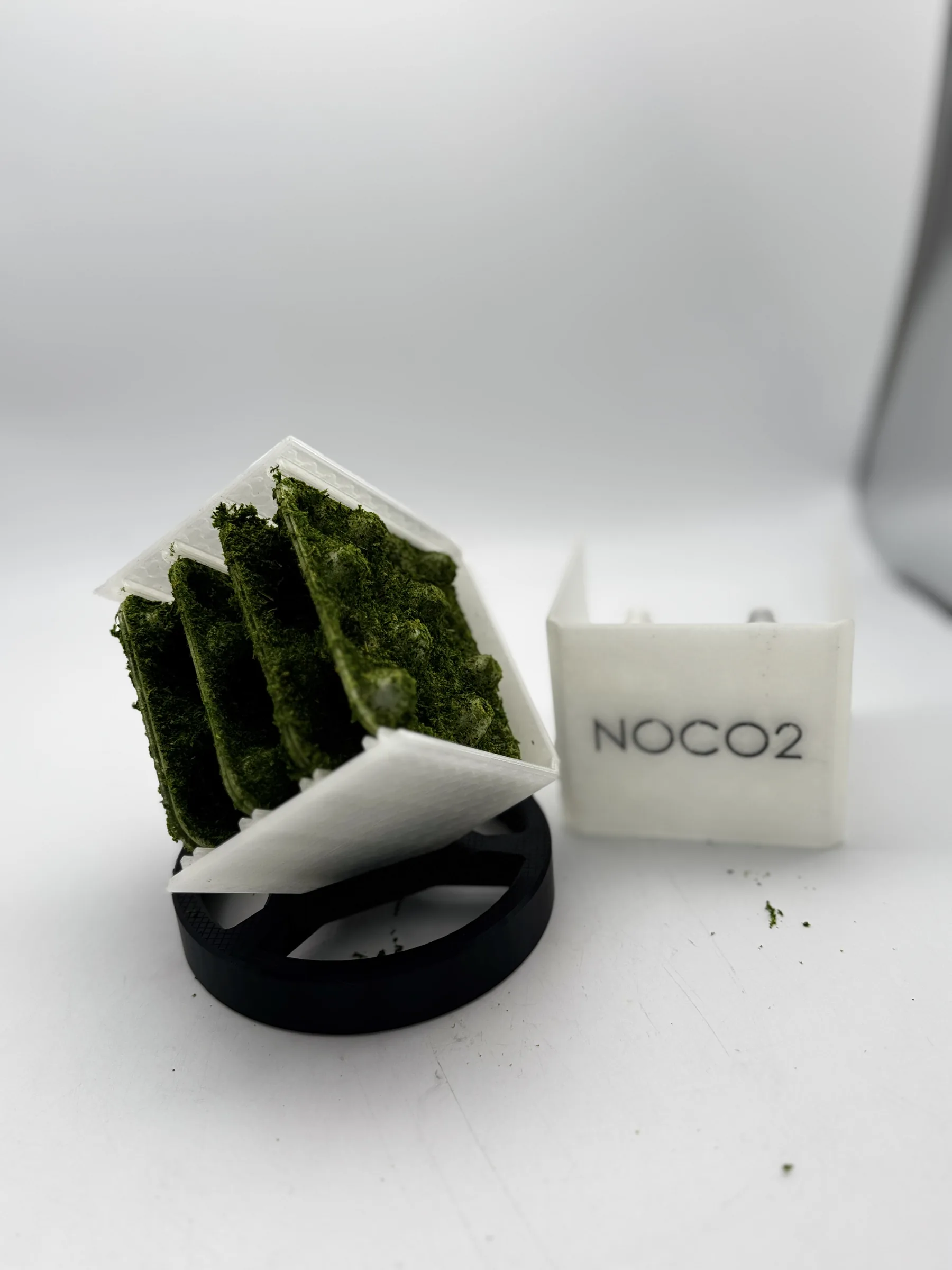
Modular by design
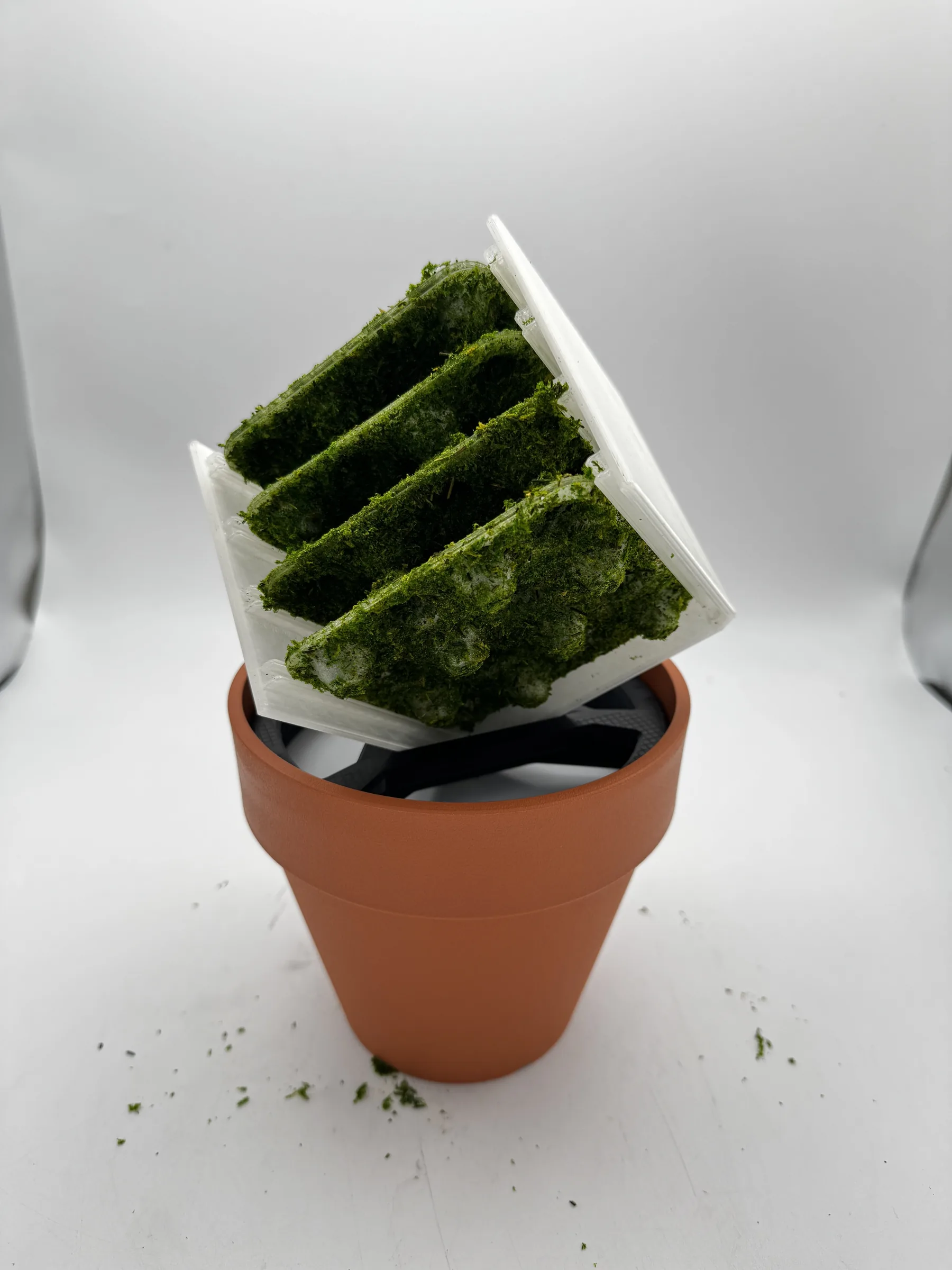
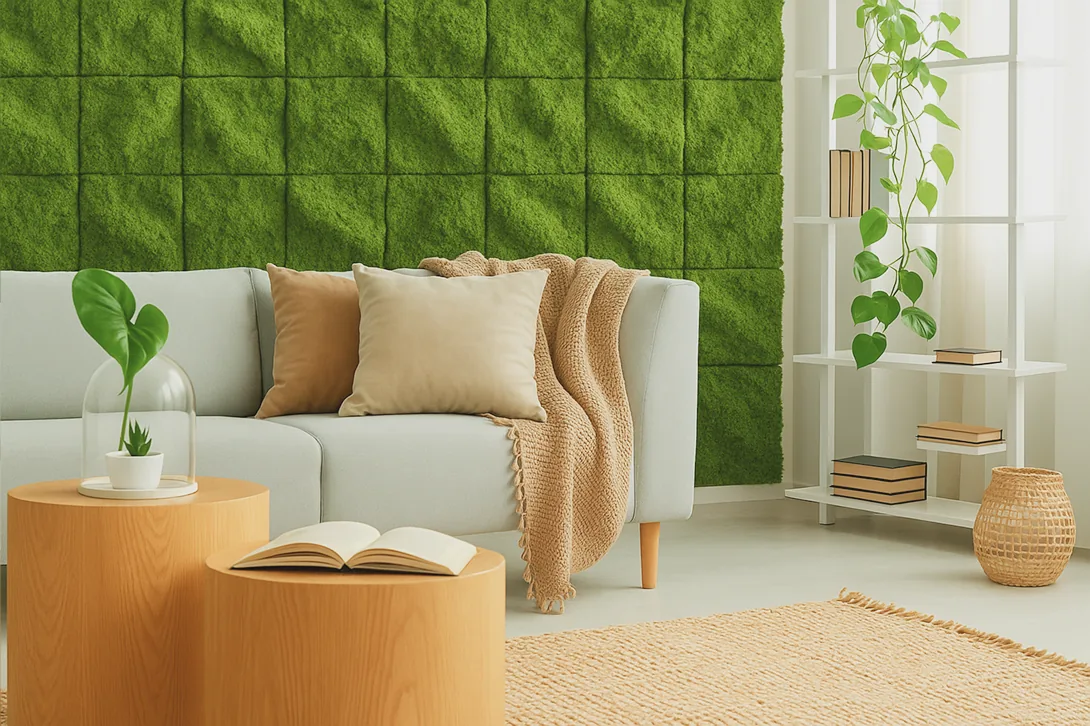
Wall panels tile into living walls of any size; the desk cube brings the same material to a single workspace. One wafer platform, multiple formats.
- Wall-mounted moss-infused panels
- Desk-top decorative moss planter cube
Viability
Real margins and a carbon footprint that pays back.
Eco-friendly modular decoration is a $250M niche growing on real trends: people want greener homes and more natural spaces. We would sell direct: panels at $12/sqft (about $4 to make), desk cubes at $29 (about $8), through social channels and custom B2B installs for hotels and wellness spaces.
The carbon story holds up. Each panel takes 0.584 kg of CO₂ to make and absorbs 0.193 kg a year, so it pays back its own footprint in under four years, then keeps absorbing for as long as it lasts.
Differentiators
- First modular moss decor made from upcycled materials
- Recyclable, scalable, and easy to maintain
- Low cost per unit with premium visual impact
- Lower carbon footprint per sq. ft. than any decor alternative
Athleisure Headphones