Sleep Technology
Snooze Station
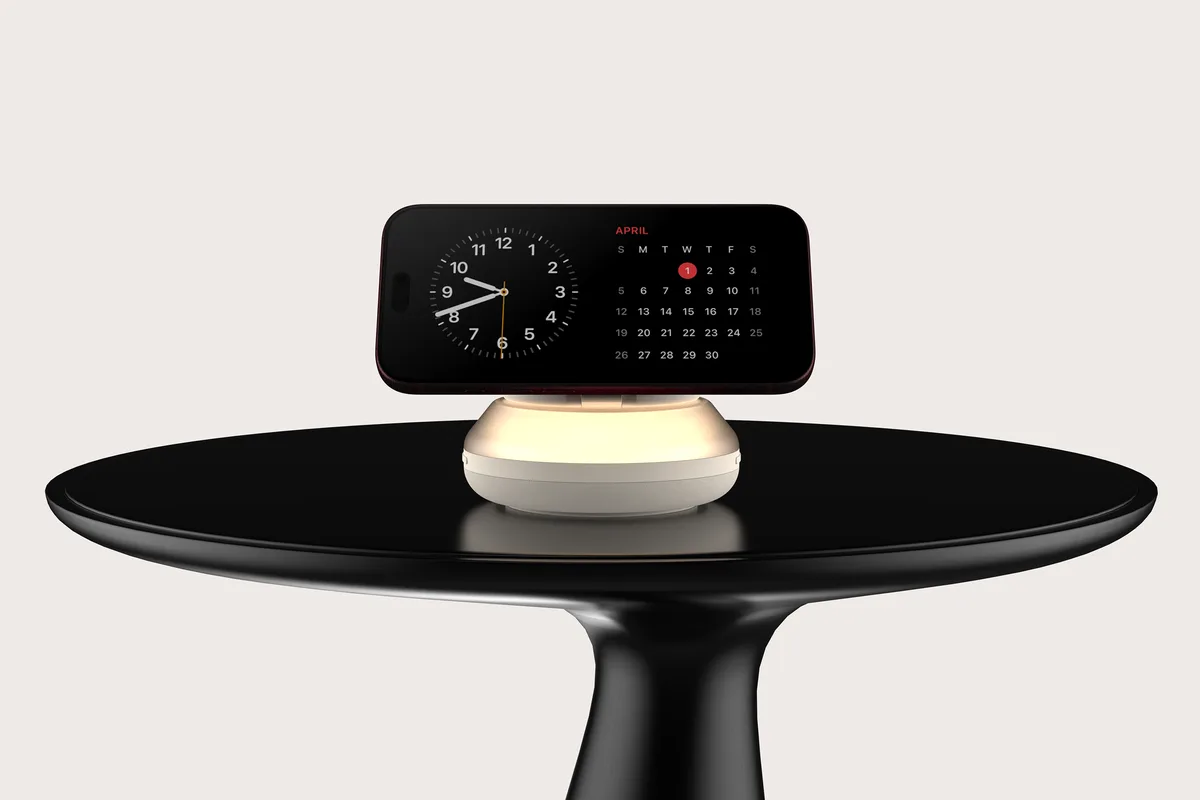
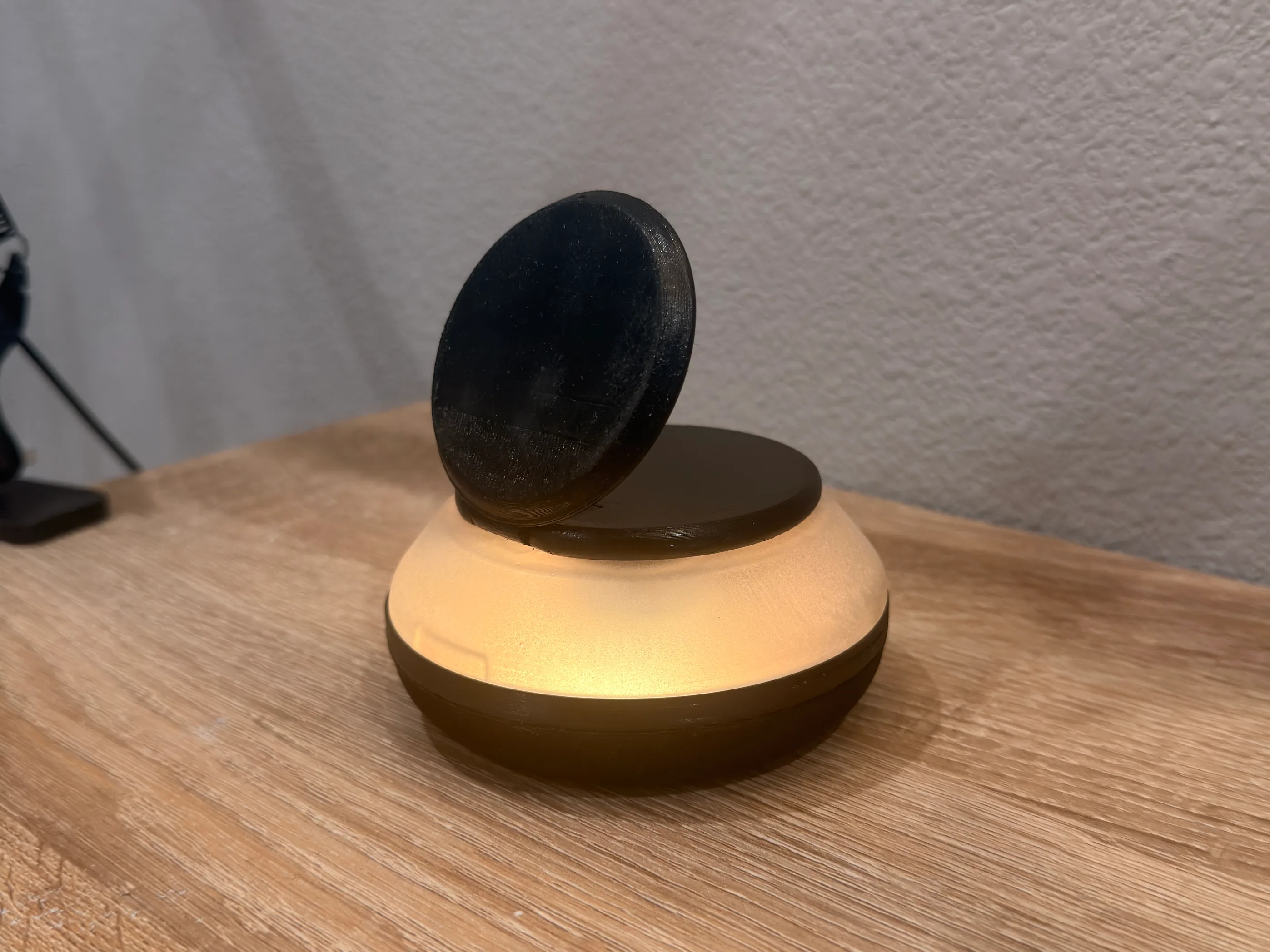
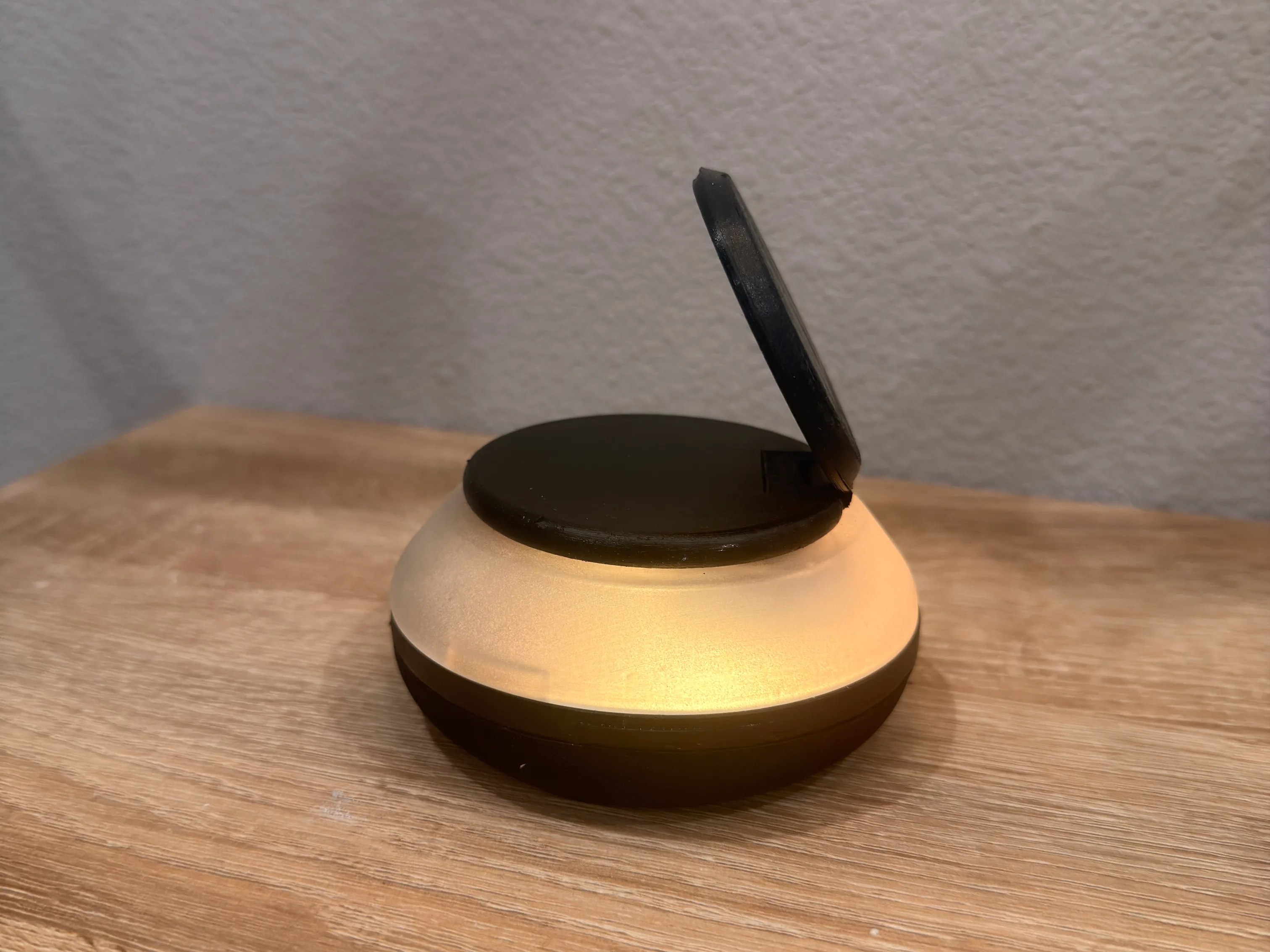
Snooze Station is a palm-sized bedside device for people who sleep in changing rooms. One object combines a speaker, a customizable nightstand lamp, and a fold-out MagSafe charging pad. It runs an automatic wind down, sleep, and wake routine from the schedule already on your phone. Designed for Belkin's audio division.
Problem
A sleep routine works until you leave the room.
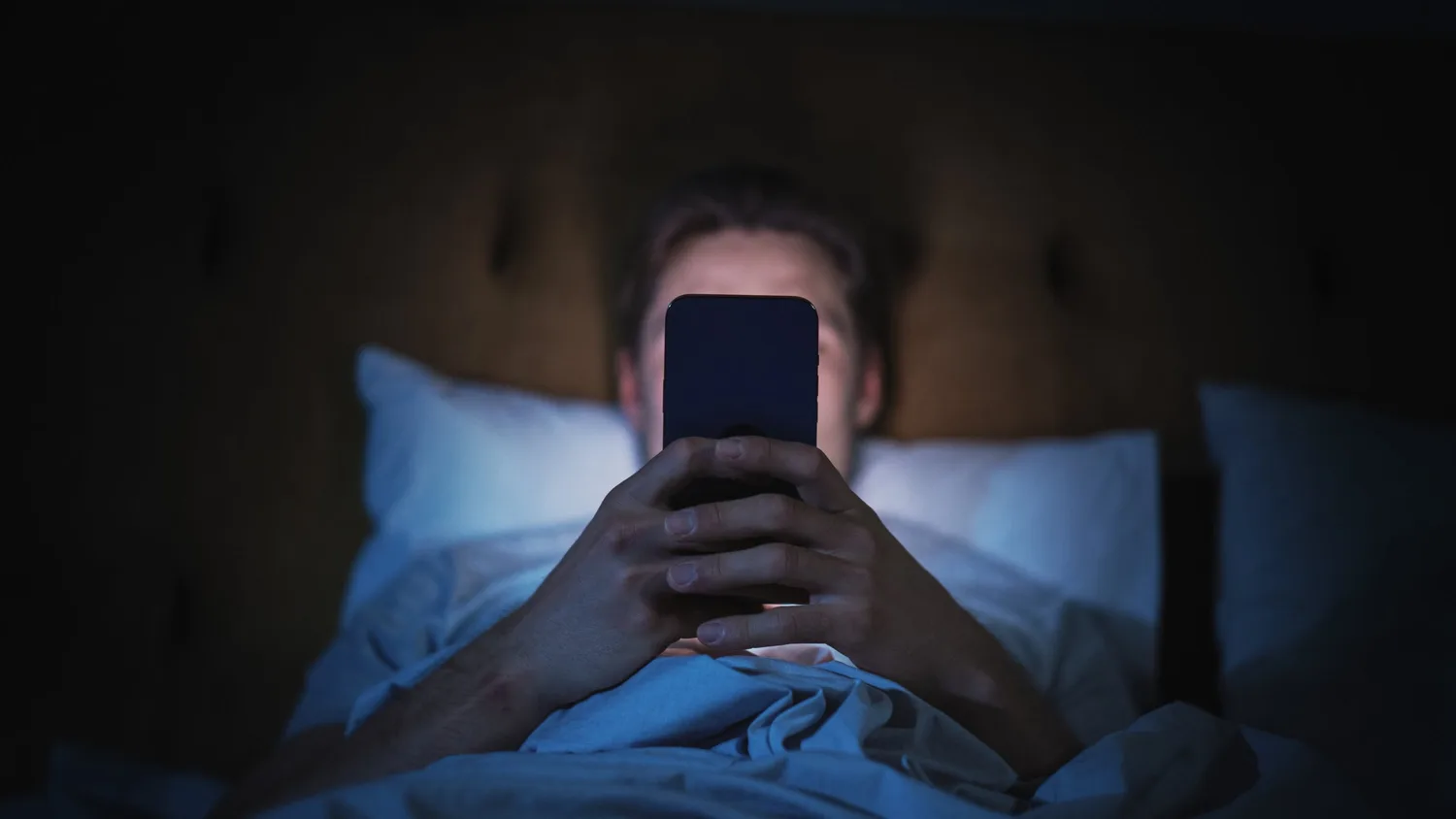
Frequent travelers feel unrested even after enough hours in bed. Their routine lives at home: the sound machine stays on the nightstand, the phone speaker is thin, hotel alarms are unreliable, and every room sounds different. Outlets are scarce, and fiddling with an app in the dark just wakes you up more.
The research is clear about what sound can and cannot do. Acoustic sleep aids reliably help people wind down and feel they slept better, but they do not add hours of sleep. And there is a contradiction at the center of the category: the phone is both the sound source and the one thing every piece of sleep advice says to put away at night.
The frequent business traveler
28 to 45, consultants, sales, engineers on client sites always on the move. They treat sleep as part of doing the job well, and want a good-looking object on the nightstand, not a gadget.
Irregular sleepers
Shift workers, nurses, parents, students. Their bedtimes change constantly, so their routine needs to follow their schedule, not the clock.
Ideation
Start with what people will actually keep using.
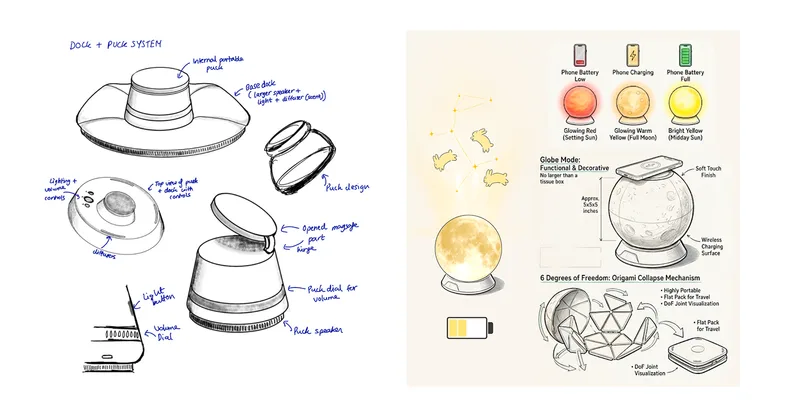
The project started from a sleep audio research report and one observation: people abandon devices that sense, and keep devices that ask nothing of them. The goal became recreating the conditions for restorative sleep, light, sound, and charging in one Belkin product, so a traveler's wind down and wake up routine stays consistent across any room and time zone.
Solution
One portable device that runs the whole routine.
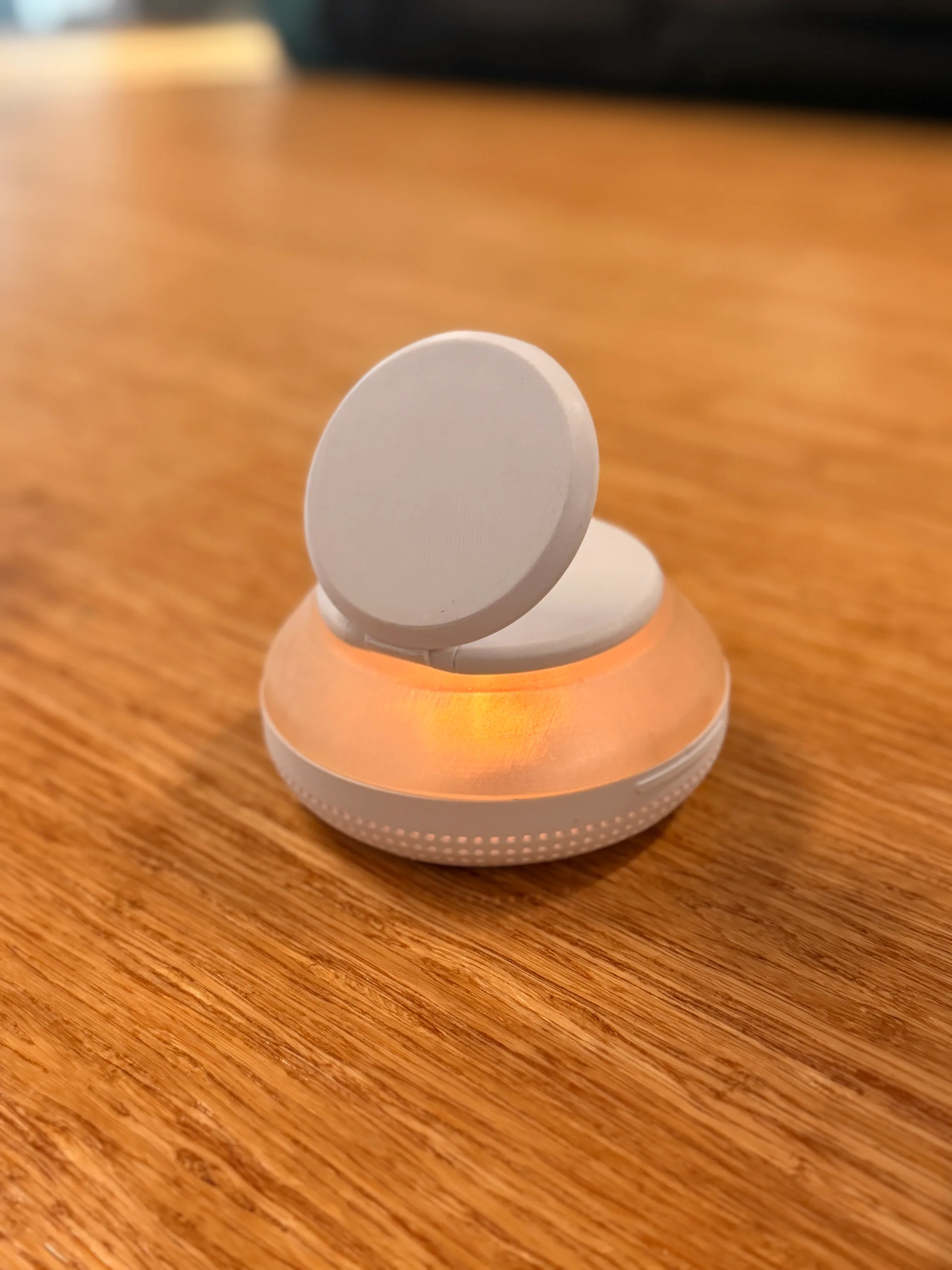
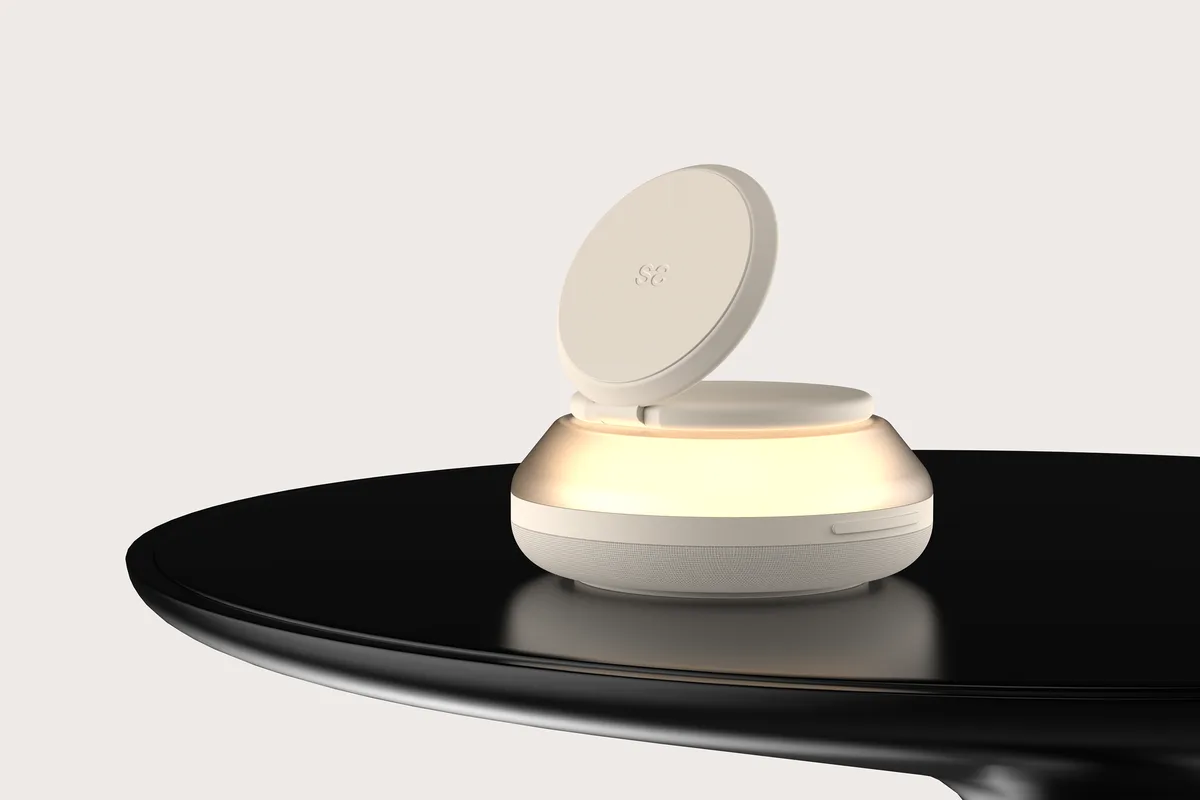
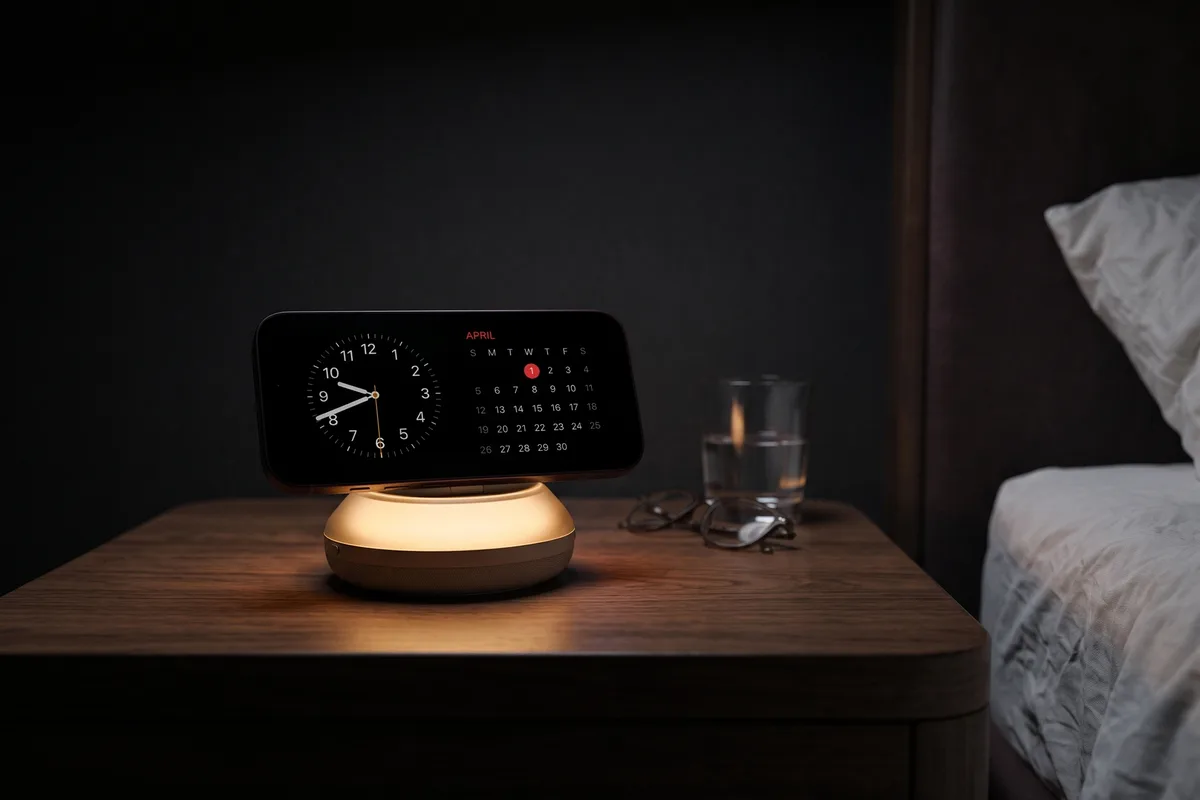
Snooze Station is a portable bedside device that packs the whole wind down routine into something palm sized. Warm amber light dims as you settle, shifts to red through the night, and ramps back up slowly in the morning instead of an alarm that jolts you. A speaker covers hallway noise and air conditioning at low volume, and a MagSafe plate holds your phone at a readable angle while it charges, so it stays out of your hands. Everything runs from a physical device you can control in the dark. It runs off the USB-C cable you already carry and sets up in about a minute, so the routine that gets you to sleep at home comes with you to a room you've never slept in.
Wind down
The light warms and dims on a slow curve while your choice of audio starts. The phase ends on its own, nothing to decide.
Sleep
Light off, sound at a low steady level that covers the noise of an unfamiliar room, phone charging face down on the pad.
Wake
Light comes up ahead of the alarm and the sound rises gently, so you surface instead of being startled.
Spec sheet
Features
Designed to integrate into any setup.
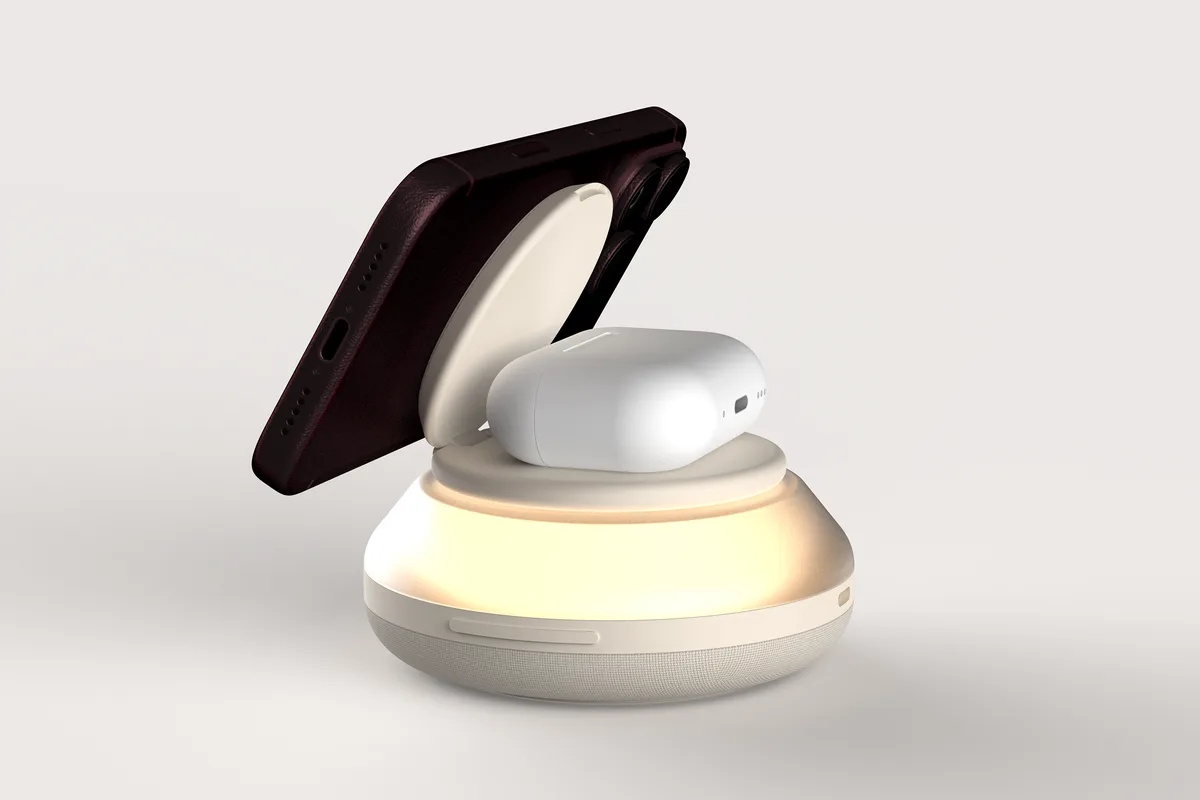
A nightstand charger
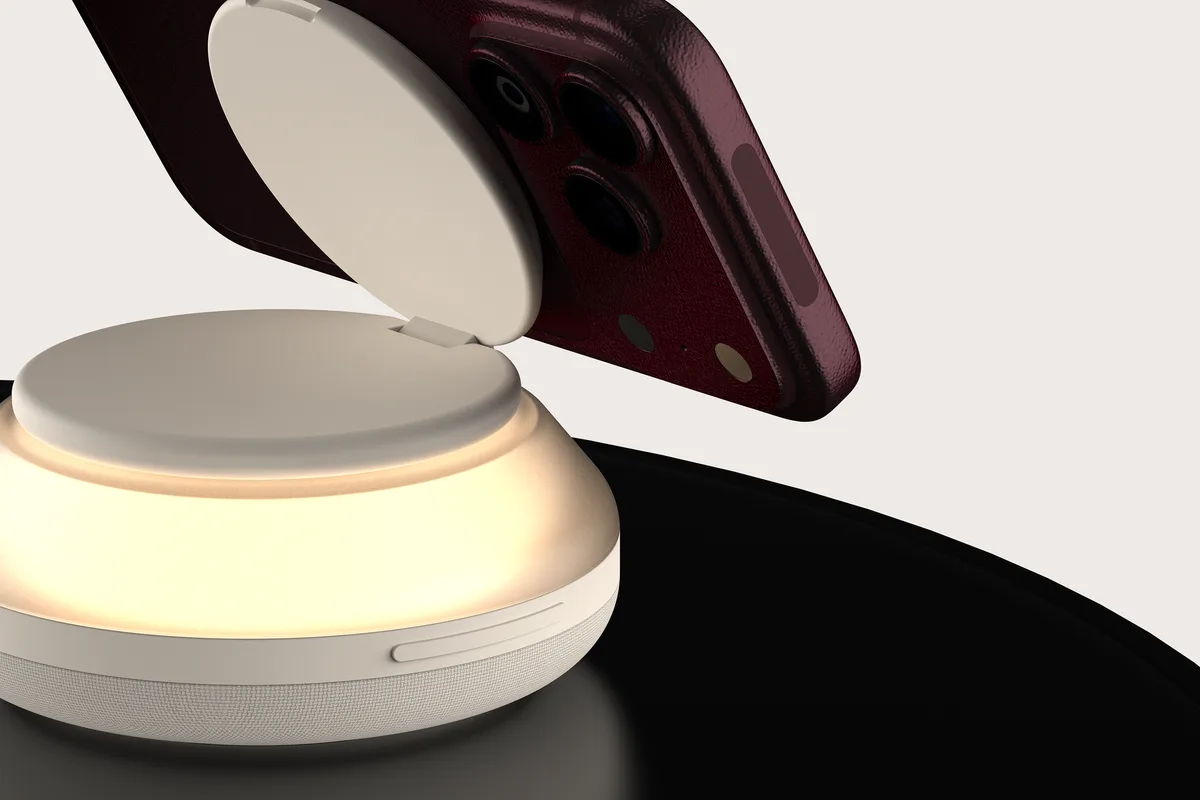
The MagSafe pad pivots up from the front edge, holds your phone at a readable angle, and folds flat for the bag. It replaces the travel charger it would occupy the same socket.
- Phone stays at an adjustable, readable angle
- Folds flat, making it easy to carry
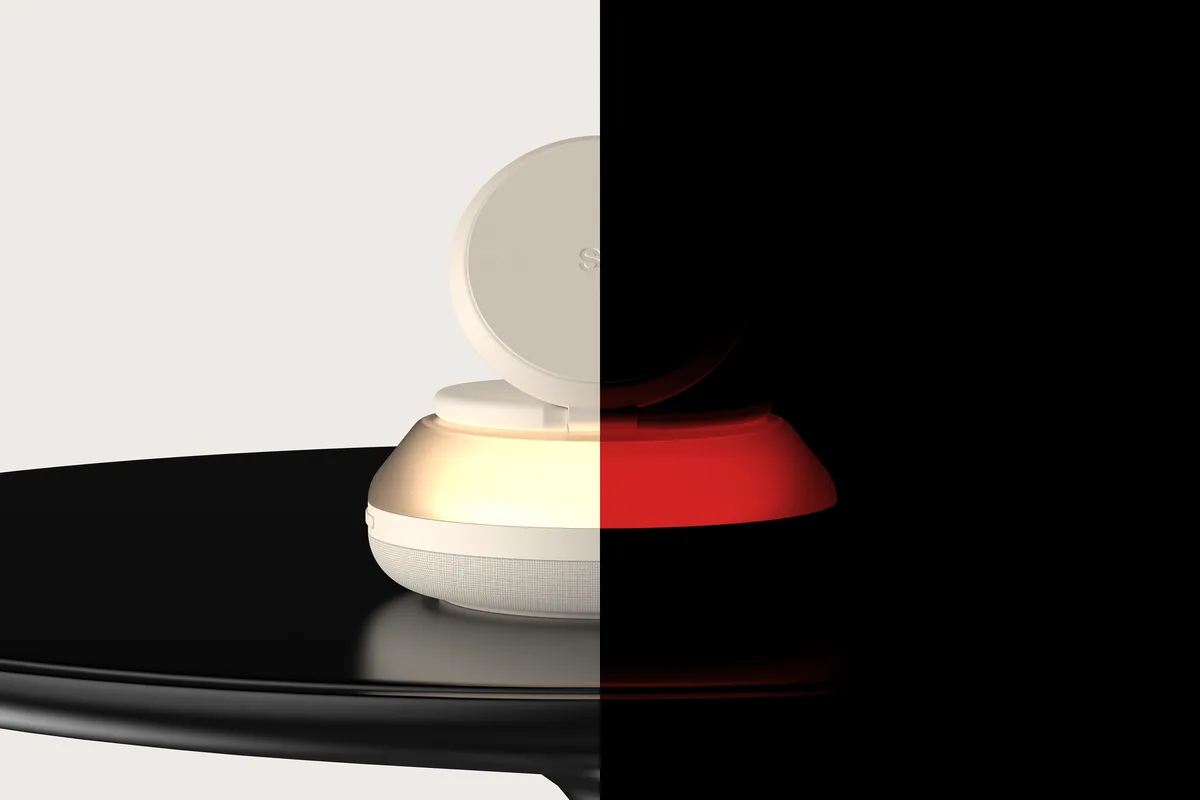
Light as a cue, not a screen
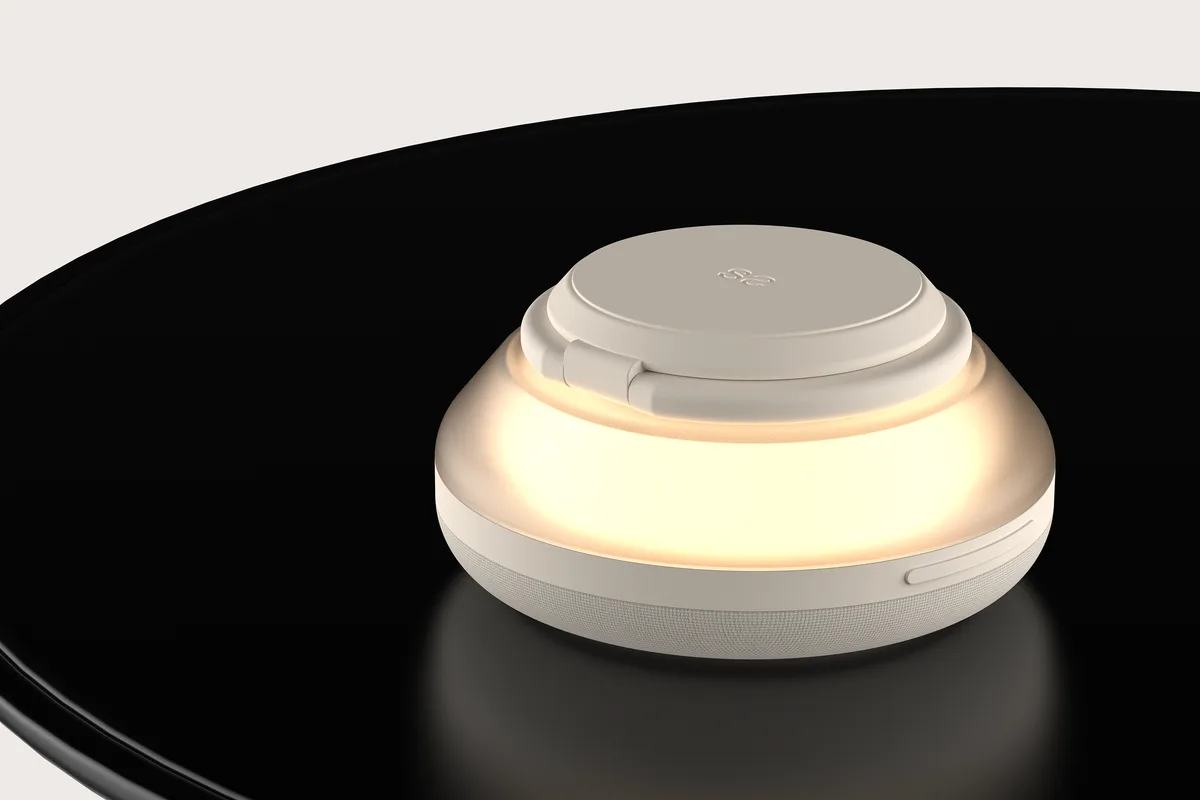
A warm amber glow from the seam dims through wind-down, switches off for sleep, and slowly returns before your alarm.
- Adjustable temperature, color and brightness.
- Adapts to your nighttime routine.
Sound that covers the room
Low, steady sound of your choice (white noise/music/etc) without being loud.
- Built for masking unfamiliar sounds and help you sleep.
Goes everywhere with you
It is portable and fits easily into a backpack or carry-on. Easy to set up and get running.
- Ready in under a minute in an unfamiliar room
- Size comparable to a Google Home mini, small enough to carry around.
Viability
Everything on the nightstand solves half the problem.
Sleep apps live on the phone you are told to put away. White noise machines stay home and do nothing else. EEG headbands sense everything and get abandoned. Sunrise clocks wake you gently but will not mask a noisy hallway, and none of them charge your phone. Snooze Station puts the whole bedside job in one object. For Belkin the fit is natural. Belkin's strength is bedside hardware and charging, which is exactly the half of this product everyone else treats as an afterthought.
Differentiators
- The same routine in every room: what you are used to at home travels with you
- It replaces the phone charger instead of fighting it for the outlet
- Focuses on fixing sensory factors (light and sound)
Outcome
The MVP pitched to Belkin
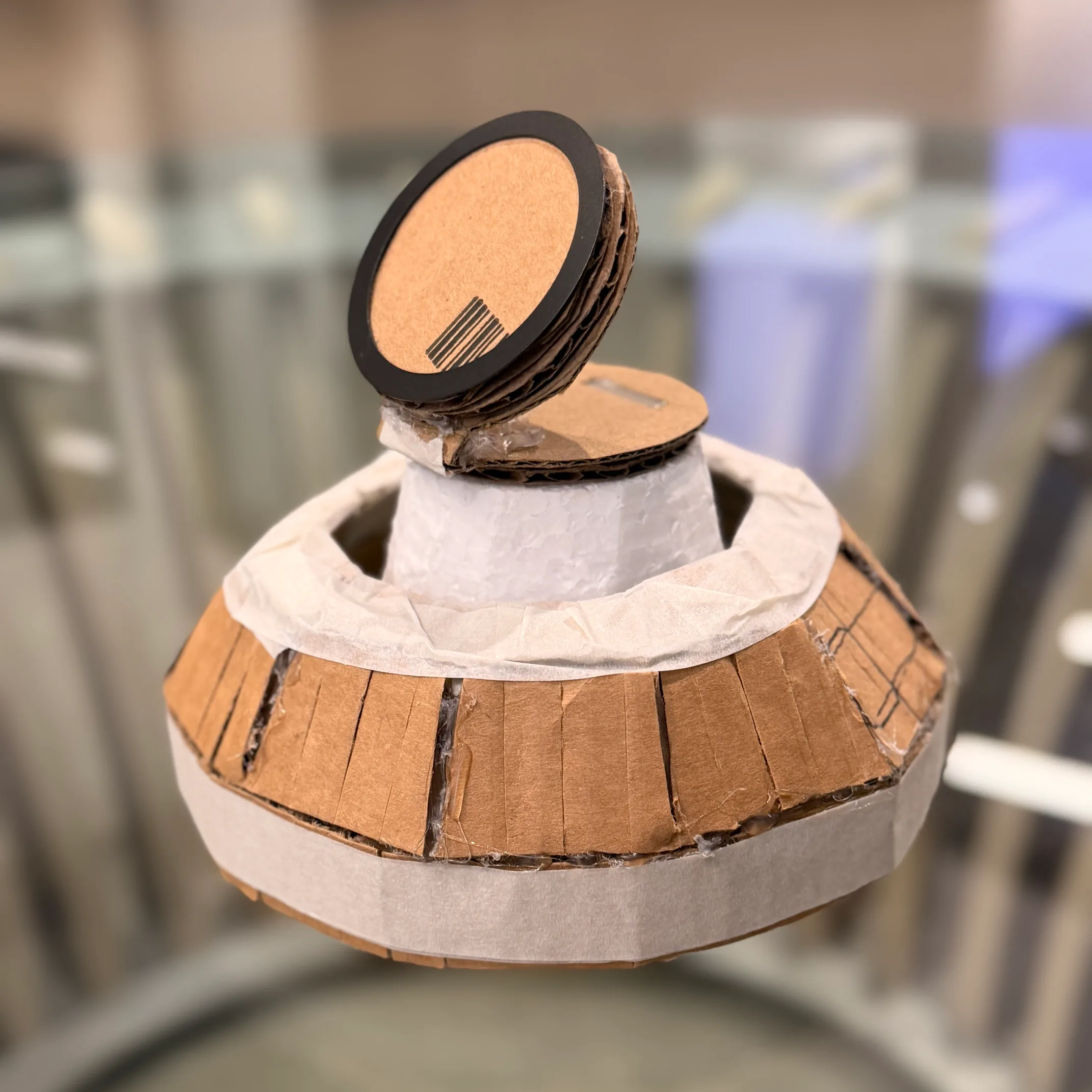
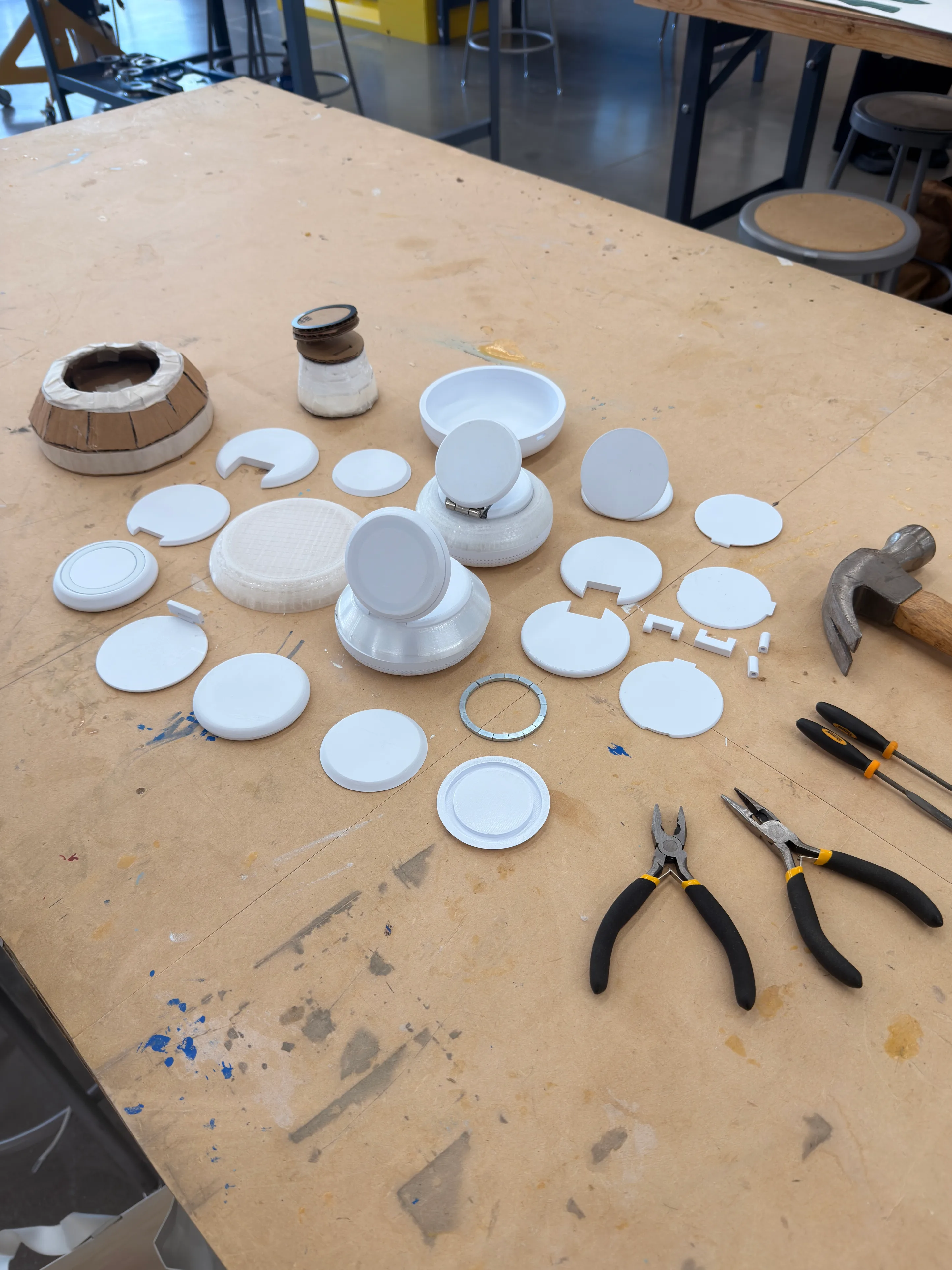
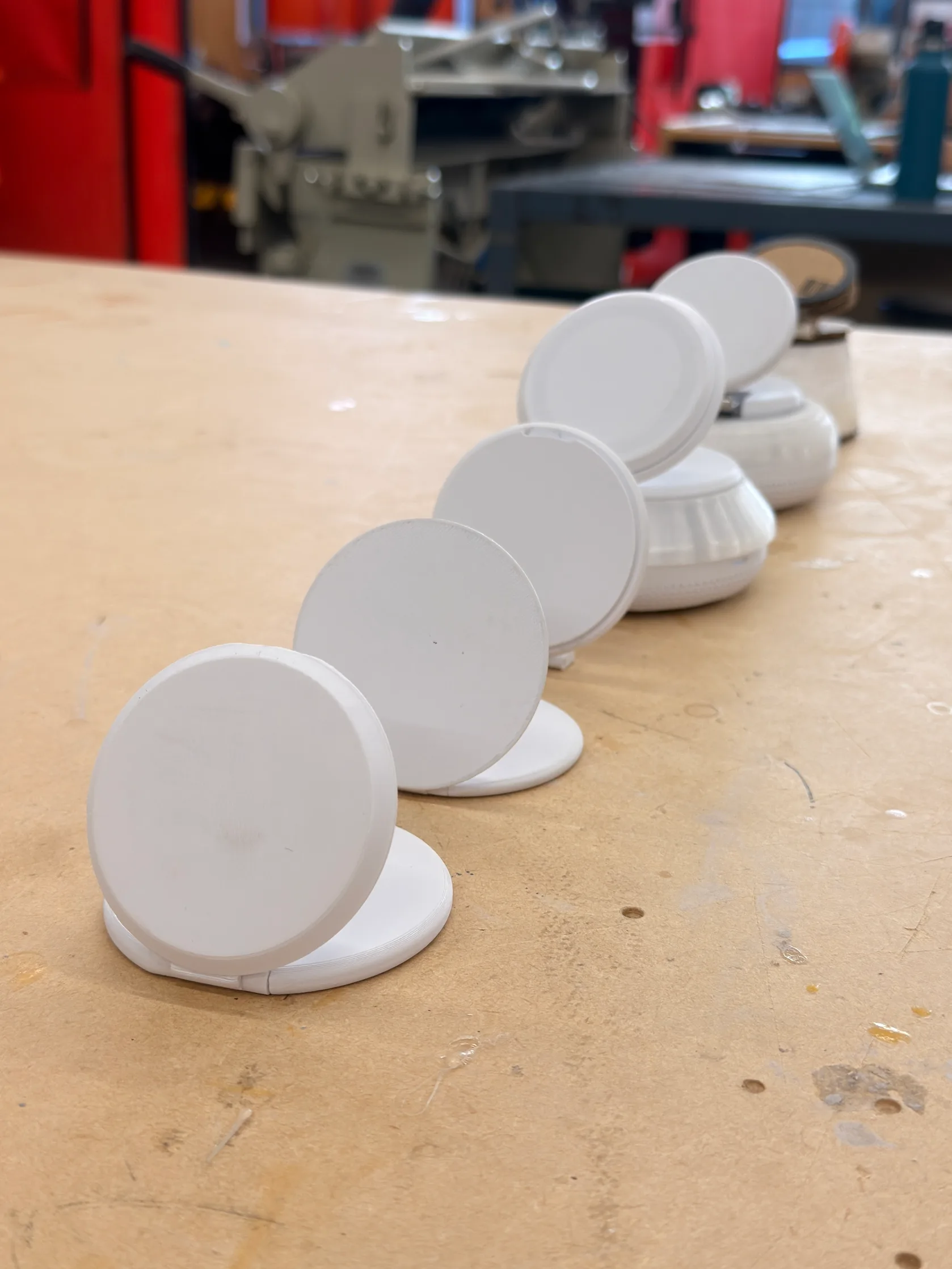
We pitched Snooze Station to Belkin at the end of the semester, presenting the problem, the research, and a working prototype. Most of the semester went into getting from concept to something that physically worked, from building an integrated hinge from scratch that held torque, fitting all electronic components into the device, identifying the correct CMF to finishing the MVP to look and work as intended.
Abacus Watch