Houseware
Stackt
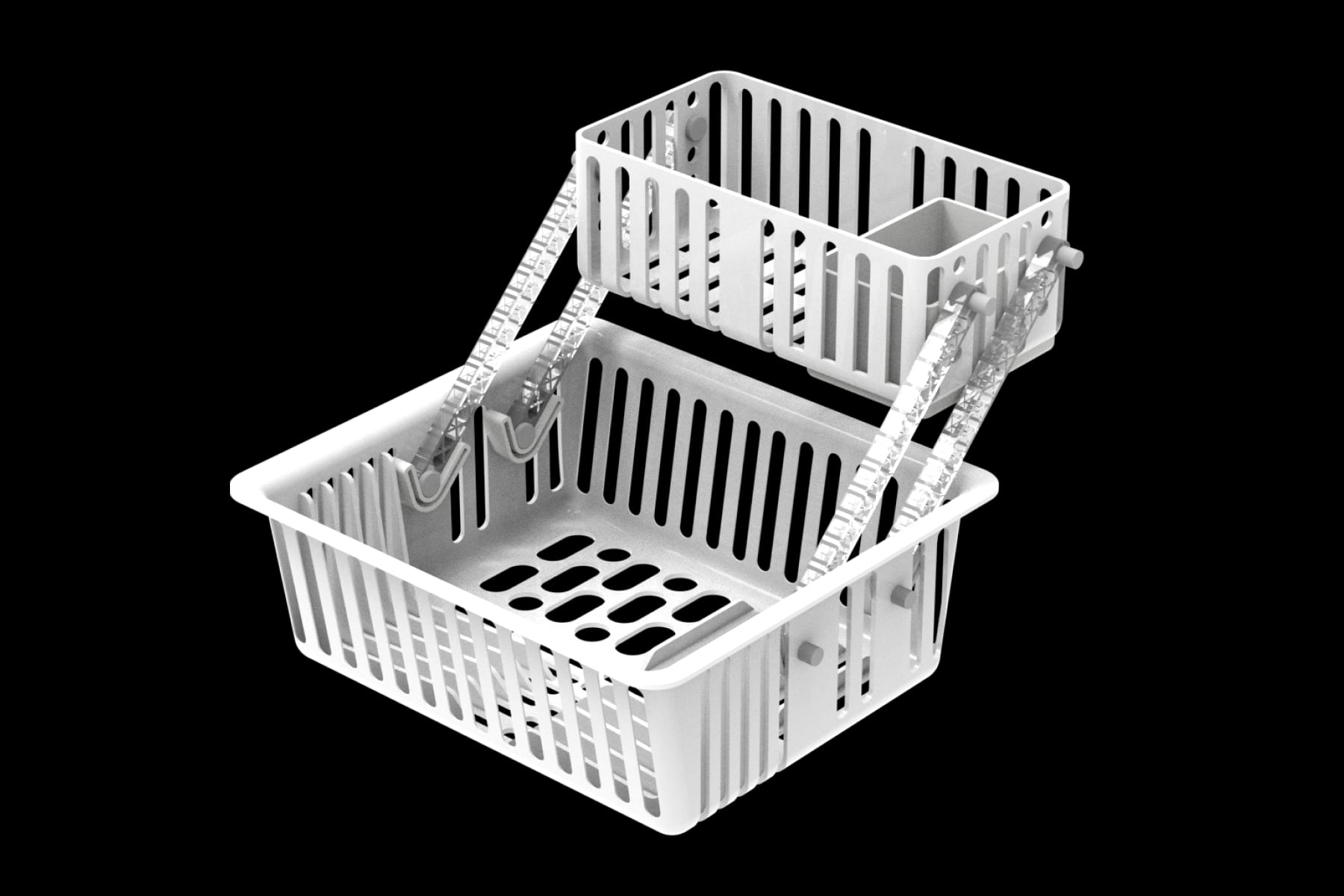
A compact, dual-basket drying rack that maximizes vertical space, enhances drying, and offers convenient access for daily utensils - while maintaining affordability and durability.
Keynote
Problem
Traditional drying racks steal the counter they're supposed to serve.
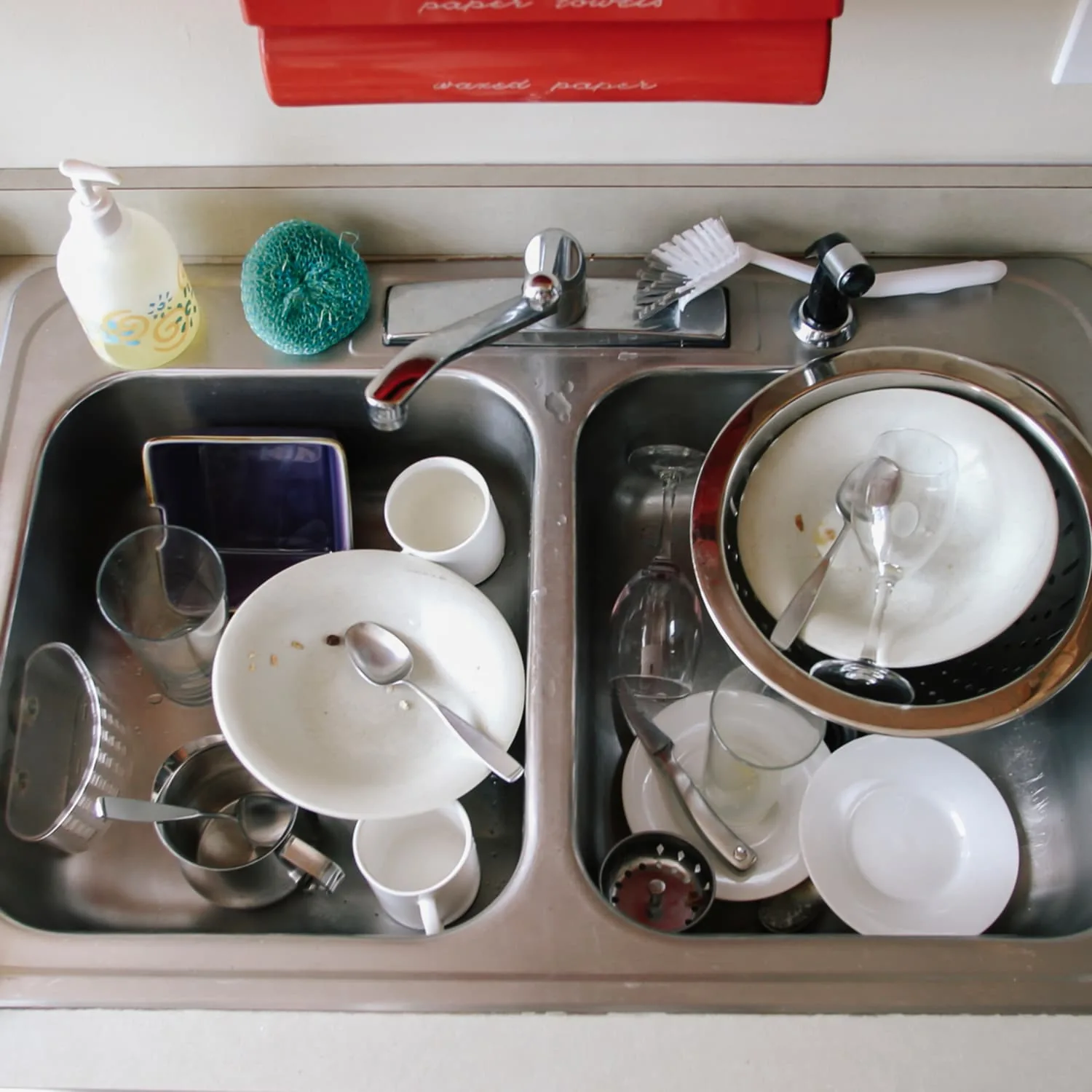
In compact kitchens (dorms, studios, small apartments) the drying rack is a permanent squatter on the scarcest surface in the home. Limited counter space leads to inefficient drying and daily frustration, and asking people to change habits and put dishes away after every use simply doesn't work.
The overcrowding compounds the problem. Overloaded racks leave items wet or precariously stacked, which makes retrieving a dish for its next use an exercise in Jenga. And the products built for this problem mostly aren't: existing racks are bulky, assume generous counters, or assume a dishwasher, which roughly a third of US households, and most dorms, don't have.
Dorm and student kitchens
Shared sinks, zero personal counter space, and no dishwasher. Need capacity that appears and disappears.
Small-apartment renters
Compact kitchens where every square inch of counter is contested; can't install or modify anything.
Minimalist households
Want the counter clear and the rack invisible when not working, without paying premium-rack prices.
Ideation
Making extra capacity temporary instead of permanent.
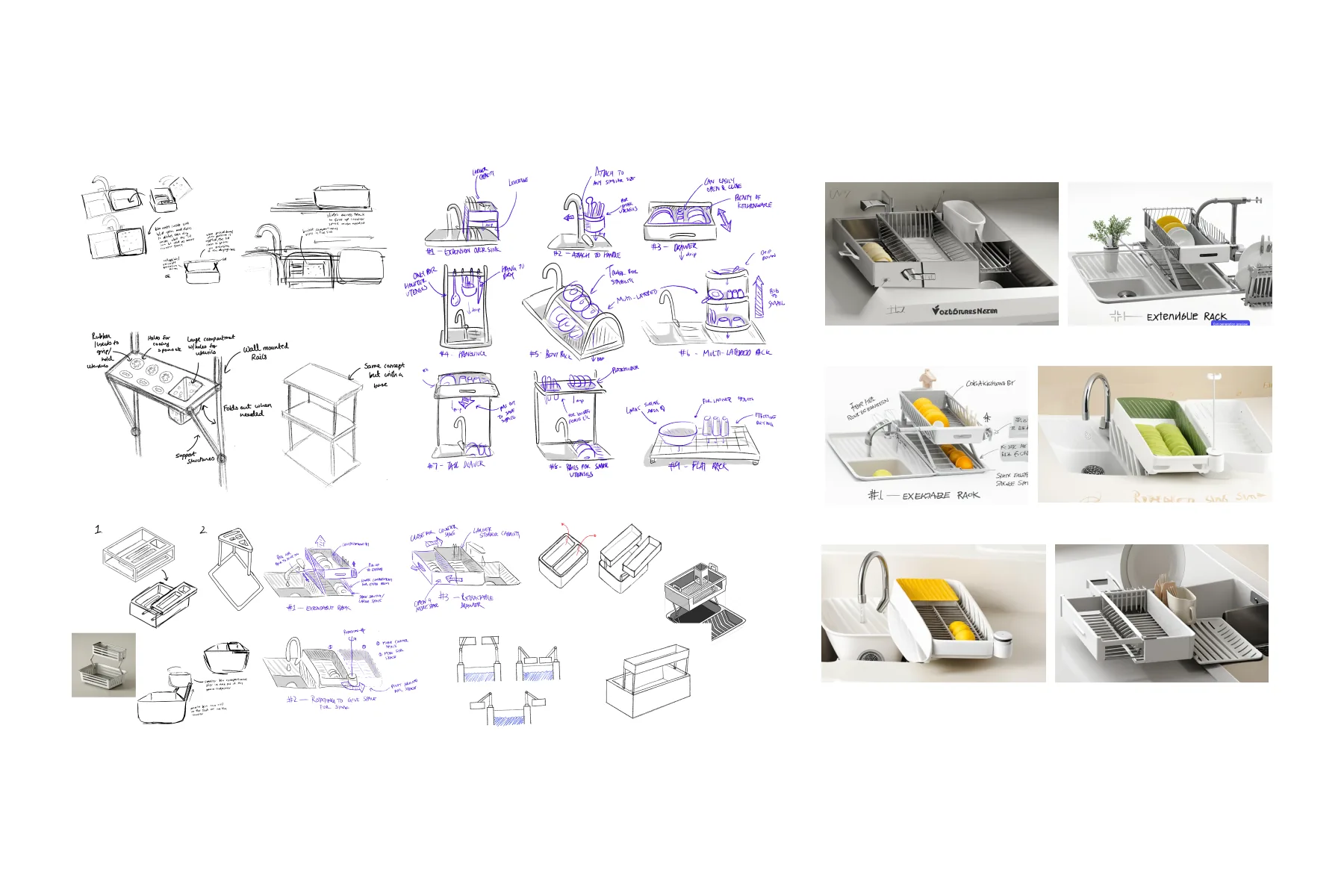
We started by benchmarking the category: extendable over-sink racks, in-sink baskets, roll-up mats, and multi-tier towers. Each solved one variable: capacity, footprint, or drainage while sacrificing the others. Towers gave capacity but colonized the counter; in-sink baskets kept the footprint but capped capacity; mats drained well and stored nothing.
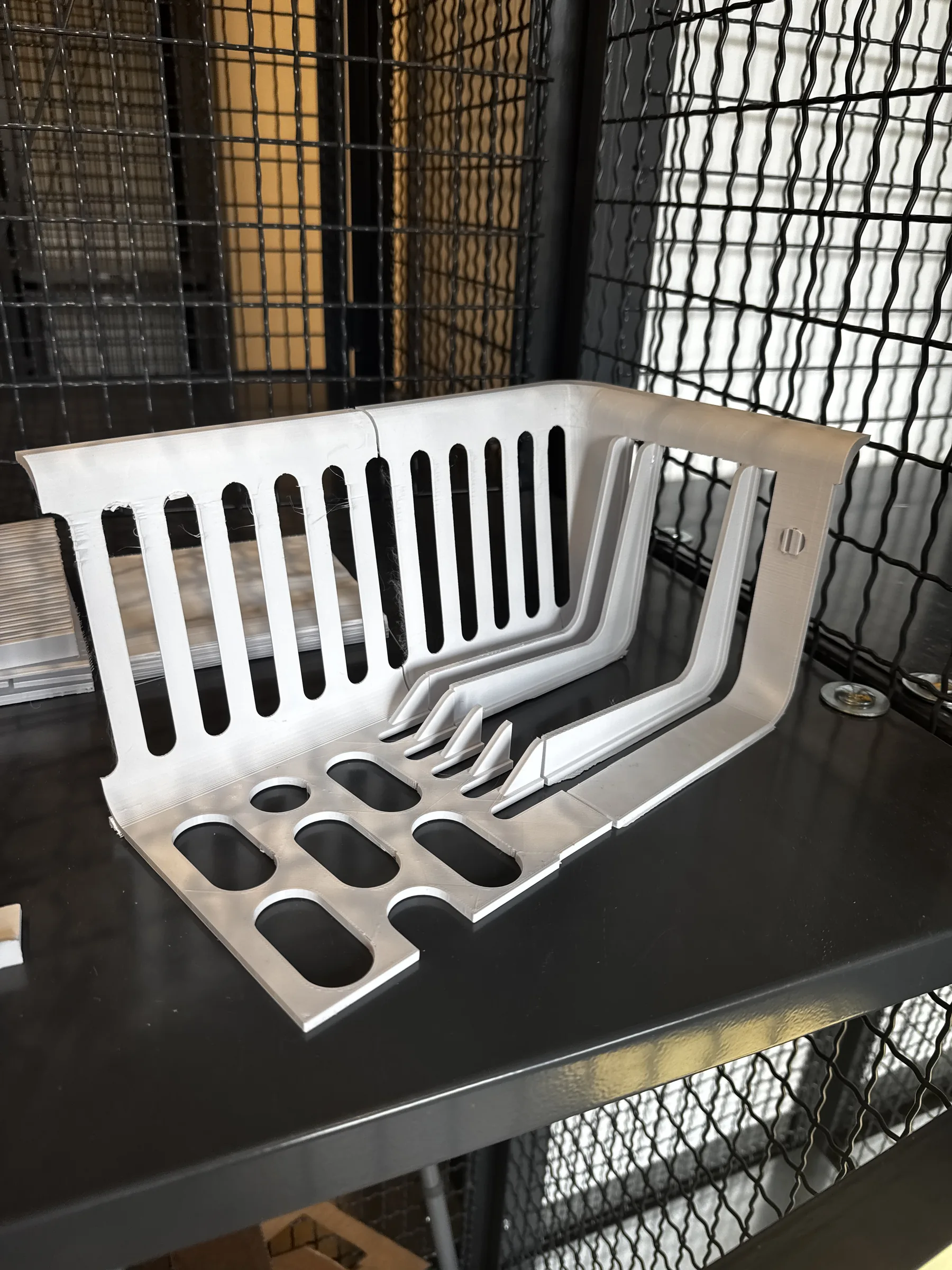
Sketch exploration ran wide: over-sink expansion frames, faucet-hung baskets, drawer-style pull-outs, wall-mounted fold-downs, multi-layered towers, and flat expandable racks. The breakthrough was making capacity itself temporary: a second basket that stacks vertically over the sink when needed and nests away when not.
Solution
A second basket that stacks over the sink.
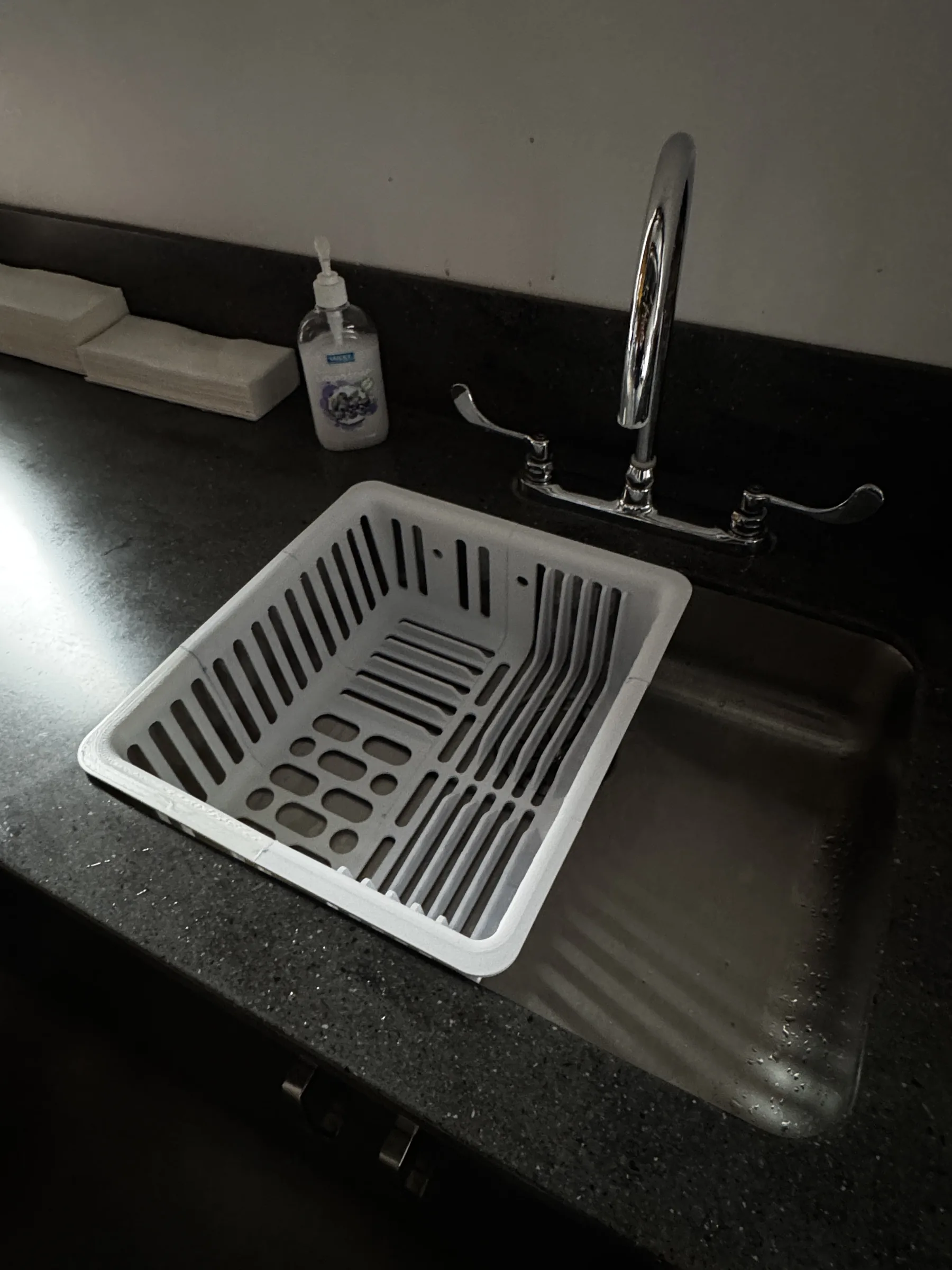
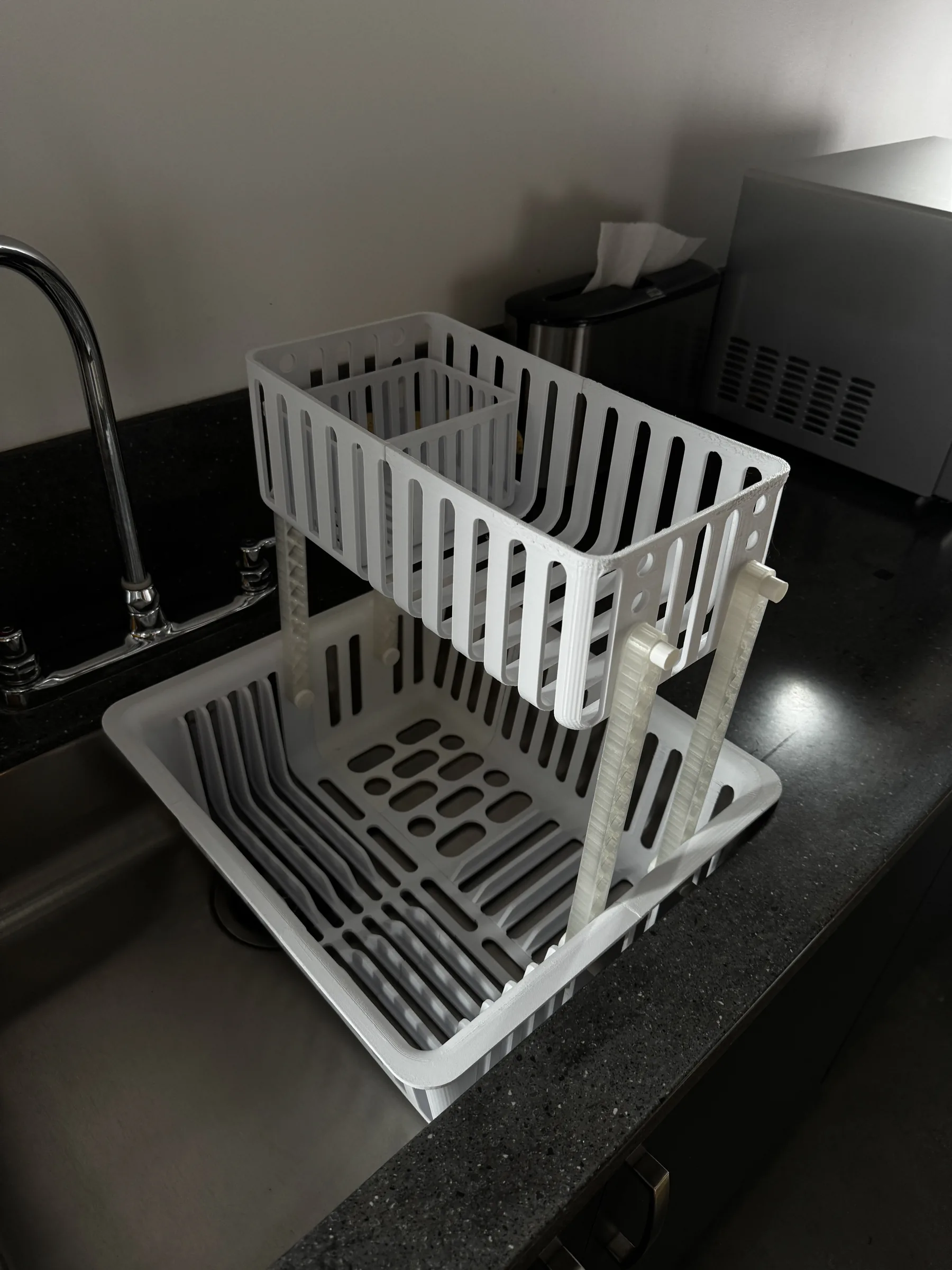
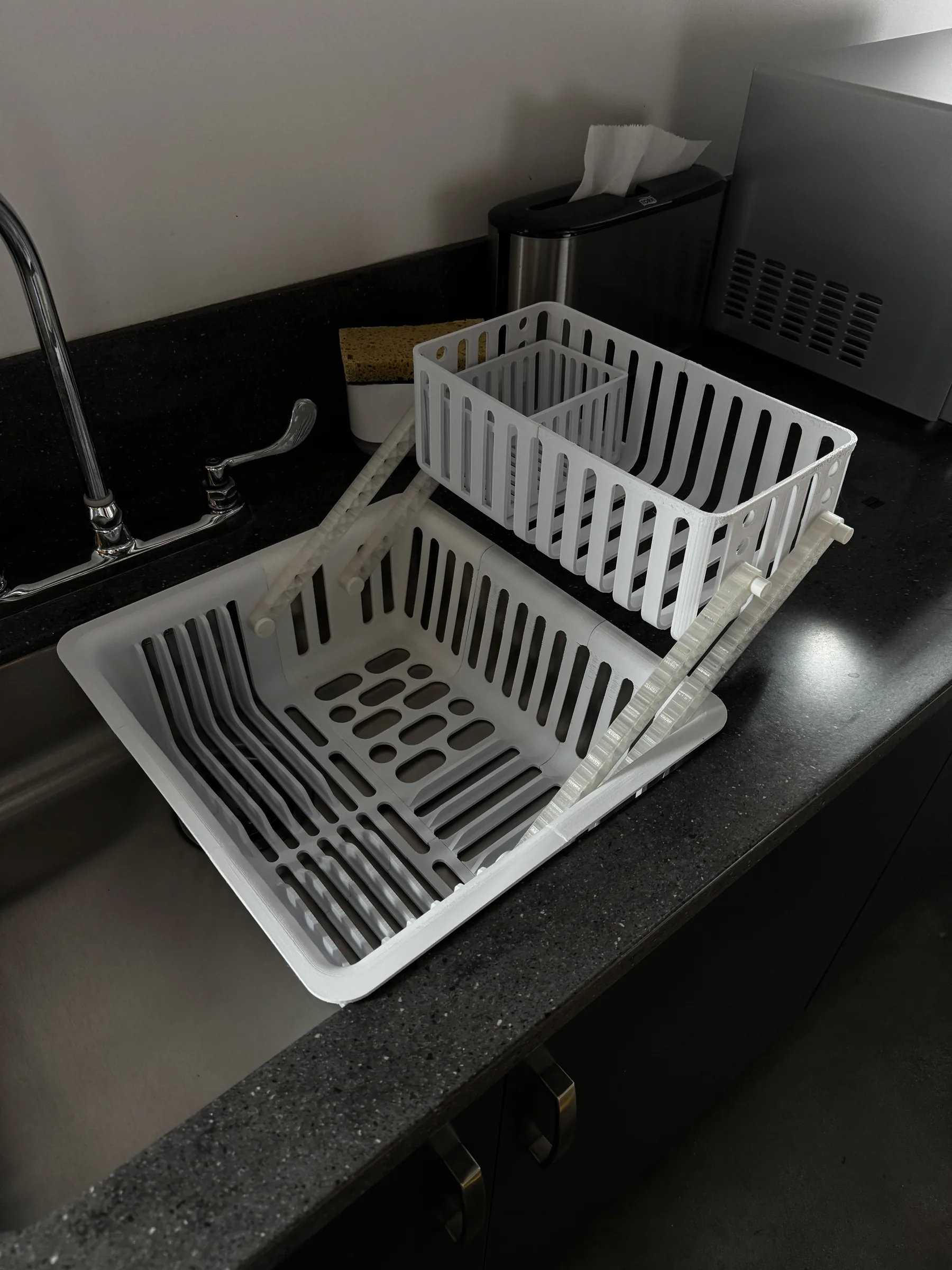
Stackt is a compact, dual-basket drying rack that maximizes vertical space, enhances drying, and offers convenient access for daily utensils. The base basket sits within the confines of the sink, draining directly into it. When load exceeds capacity, a second basket stacks above on adjustable ladder-strap links, doubling drying area vertically over the basin instead of horizontally across the counter.
A removable utensil caddy clips into the upper tier, keeping daily cutlery at grab height. When the dishes are done, the straps fold and both tiers nest into a single basket. The entire system collapses to the size of its base and stays out of sight in the sink or a cabinet.
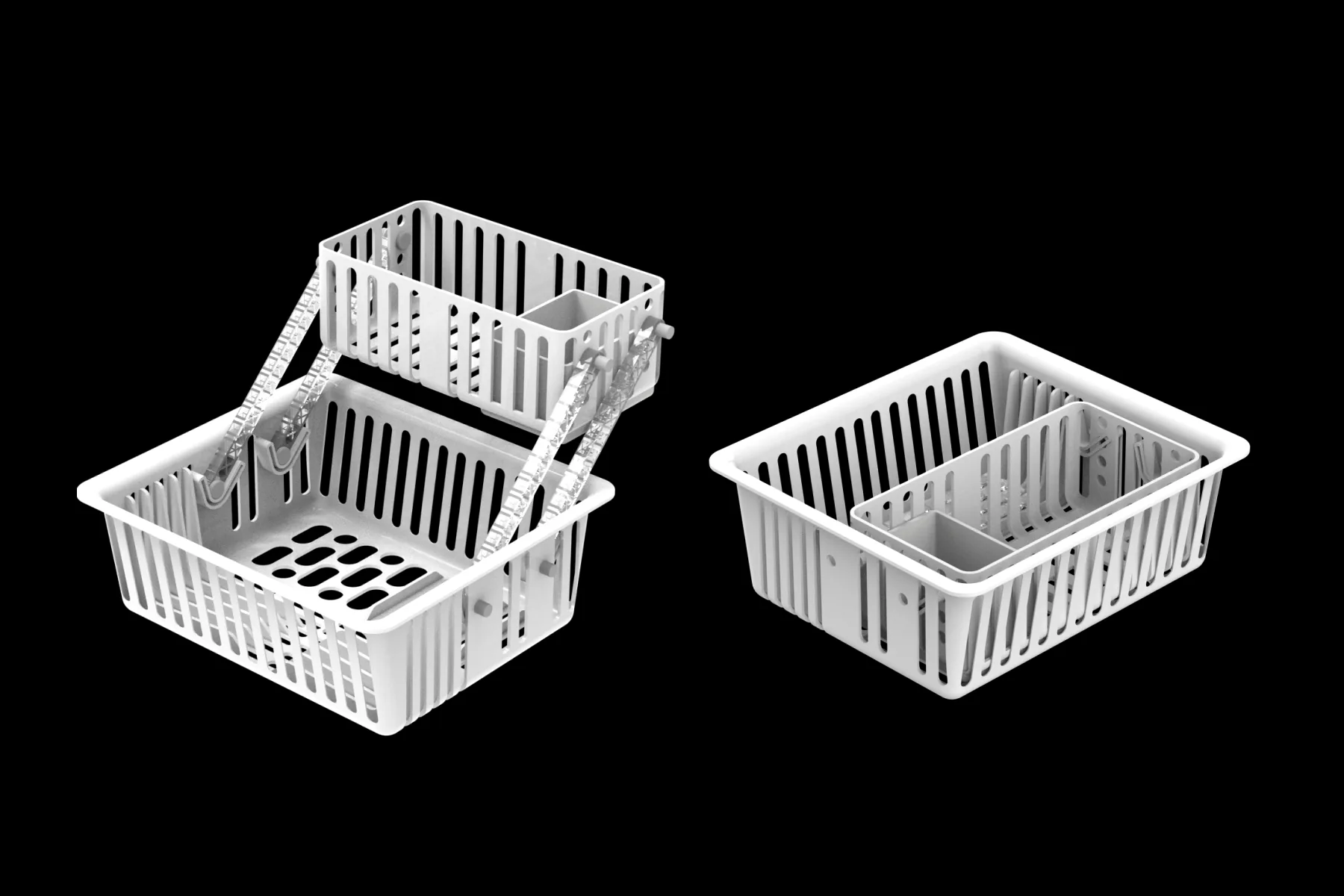
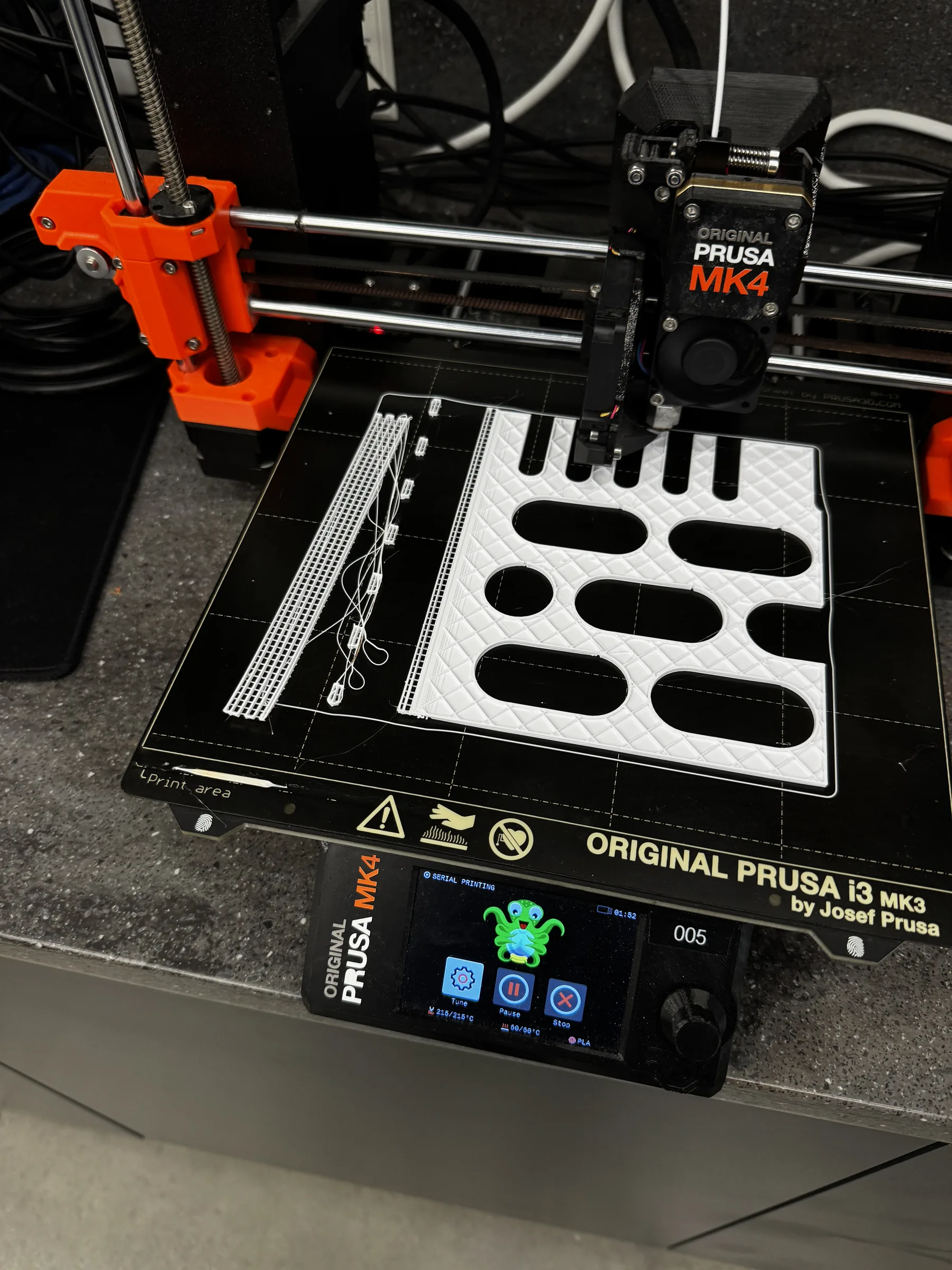
Two ribbed baskets and a caddy in a single food-safe polymer, designed as simple open-and-shut 3D prints with no undercuts.
Link
Adjustable ladder straps set tier height and angle, printed as flexible one-piece elements with no metal hardware to rust.
Nest
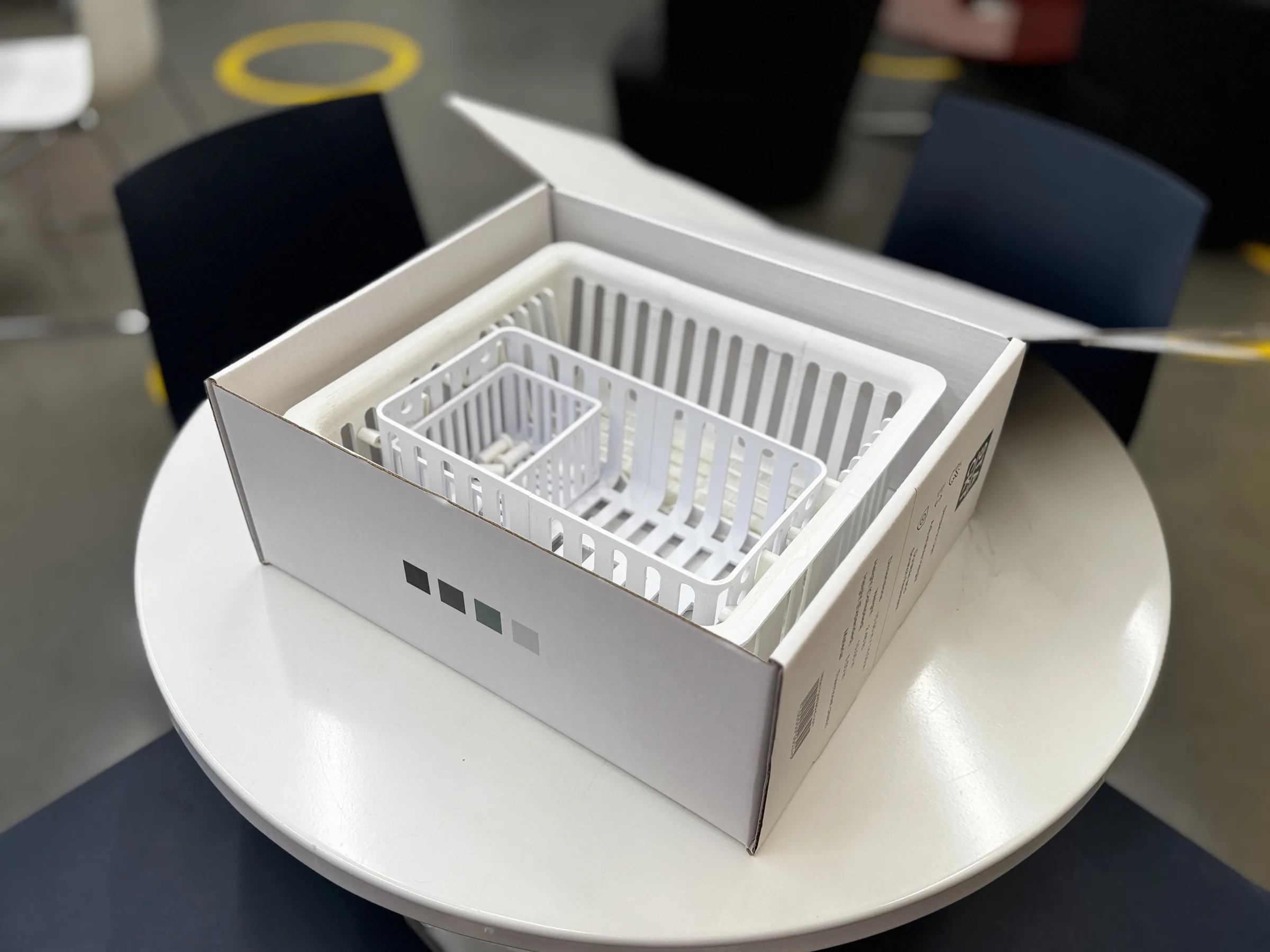
Every part is dimensioned to nest inside the base basket, collapsing the two-tier system to single-basket volume for storage and for a smaller retail box.
Features
Capacity on demand
The second tier exists only when the dishes do. Stack it for the post-dinner pile; nest it away and the kitchen forgets the rack was ever there.
- Doubles drying area vertically over the sink
- Collapses to single-basket volume in seconds
The sink does the draining
Because the whole system lives inside the basin, water goes where water belongs - no drip tray to tilt, empty, or grow things in.
- Zero counter contact, zero puddles
- Airflow on all sides speeds drying
Packaged like a product, not a project
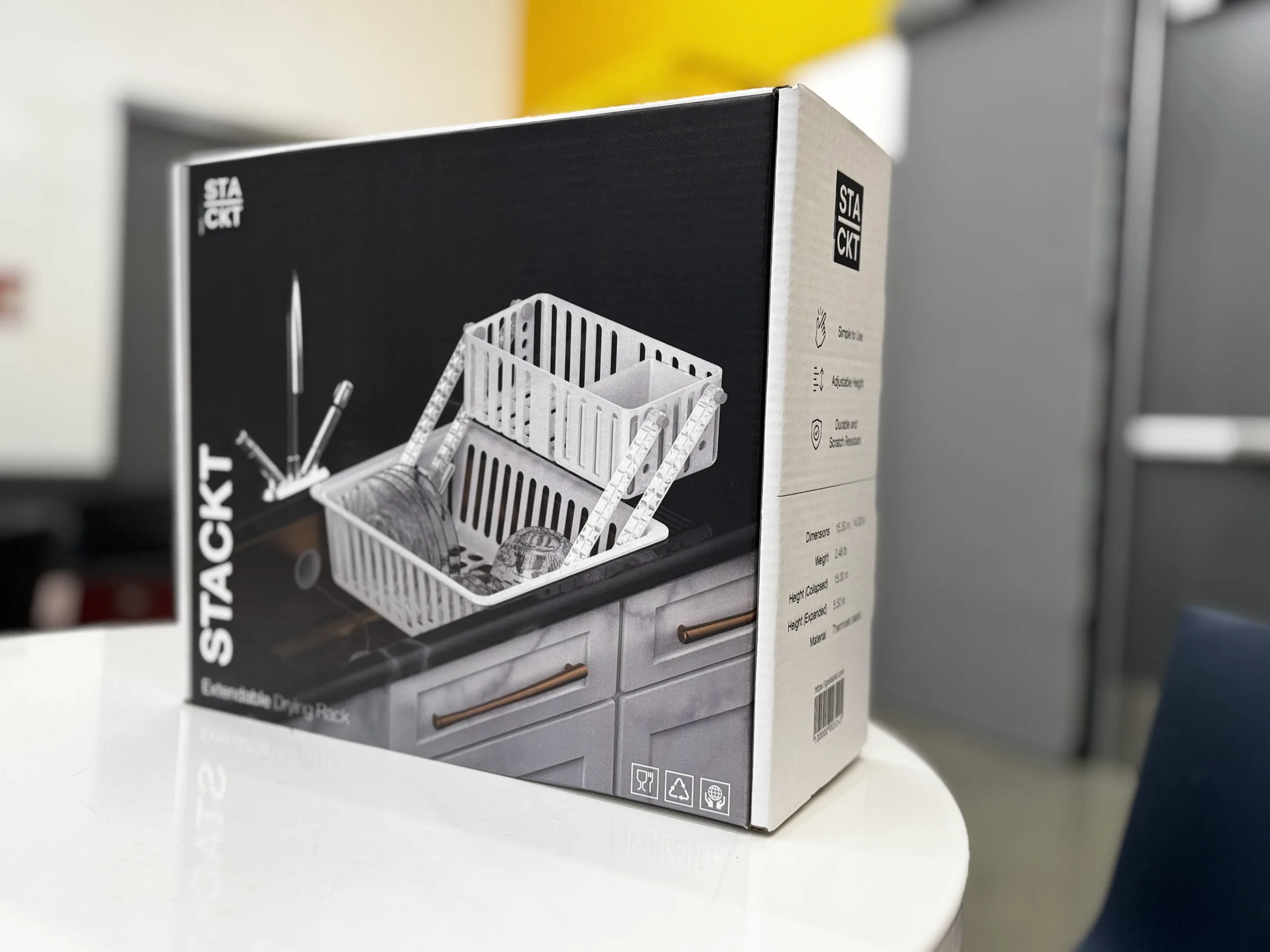
Stackt shipped the whole story: a retail box designed around the nested state, produced physically.
- Nested form cuts box volume and freight
- Full packaging system designed and printed
Viability
Priced between commodity racks and premium counter systems.
The dish rack sits inside the kitchen storage and organization market: a multi-billion-dollar category growing steadily on the same tailwinds Stackt is built for: smaller homes, renter households, and minimalist-organization trends.
The price architecture is the opportunity. Commodity flat racks sell at $10-20 and premium counter racks (simplehuman, OXO, Joseph Joseph) at $40-90 with almost nothing in between engineered specifically for small kitchens. Stackt's simple two-mold polymer construction targets that gap: a $25-35 retail price with healthy margin, sold D2C and through dorm/back-to-school retail where the no-dishwasher audience concentrates.
The nested design is also a logistics advantage: the collapsed system ships in a box barely larger than one basket, cutting freight and shelf volume against every two-tier competitor.
Outcome
A working prototype with finished retail packaging.
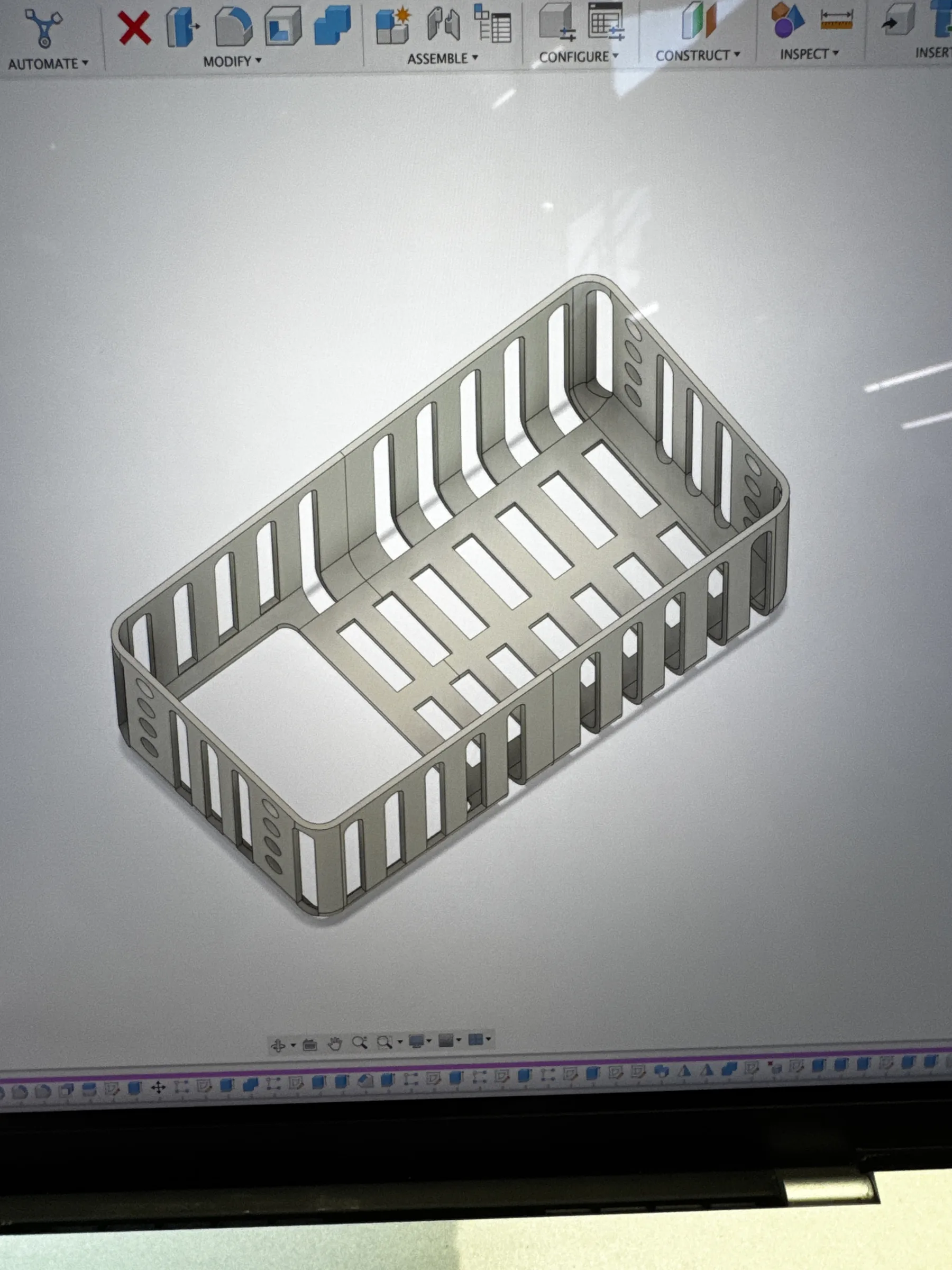
Stackt closed the semester as a complete product story: a working 3D-printed prototype tested over a real sink through expand, load, and collapse cycles; resolved CAD for both states; and a full retail packaging system designed around the nested form and physically produced, from prototype to printed box. The project proved its core bet: that in a compact kitchen, the most valuable feature a product can have is the ability to disappear. We also presented the projects to executives at Mattel and Spinmaster who appreciated the idea and saw a need for this in the market, especially for college dorms.
- Designing the collapse was harder than designing the capacity - nesting tolerances drove more iterations than the stacking mechanism did.
- Packaging is product design: building the box around the nested state halved its volume and became a genuine business argument.
- A v2 program would tackle mold-flow validation, strap fatigue testing, and color ways for the dorm retail channel.

NOCO2